
Bees play an important role in the environment, but when bee problems occur near retail space, the risks quickly extend beyond nuisance. In commercial settings like shopping centers, strip malls, and standalone retail buildings, honey bees nesting near entrances or within walls can create serious public safety concerns, property damage, and liability issues for owners and managers.
In Central Florida, especially, retail environments provide easy access to food sources, shelter, and ideal nesting conditions. When a honey bee colony establishes itself near customer walkways or inside a building, the situation can escalate quickly if left undisturbed.
Why Bees Are Drawn to Retail Properties
Retail properties unintentionally attract foraging bees in several ways. Flowering plants, decorative trees, and landscaped medians provide pollen and nectar. Bird baths, irrigation runoff, and condensation from HVAC units supply water. Outdoor trash bins and food waste near restaurants further increase attraction.
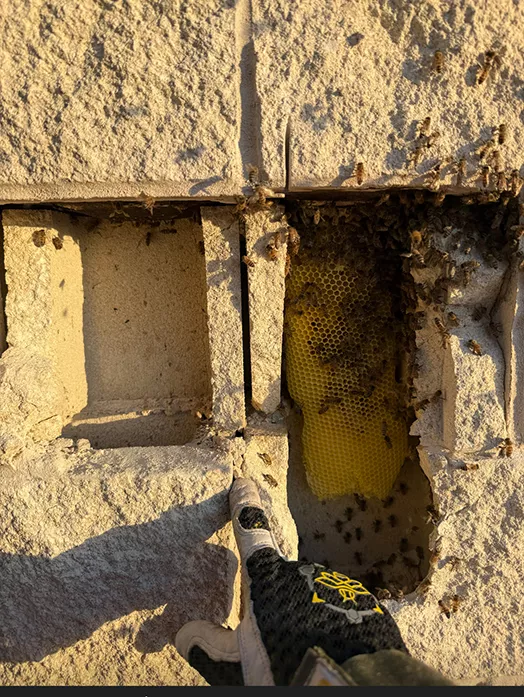
From a structural standpoint, commercial buildings often have multiple entry points. Wall voids, signage boxes, rooflines, vents, and gaps around utility penetrations give bees easy access to protected spaces where colonies can build. Once a queen honey bee establishes a nest, worker bees rapidly expand the hive, often out of sight.
Common Bee-Related Issues Near Retail Space
The most frequent bee infestation issues in retail settings involve honey bees. A honey bee nest may be hidden inside walls, above ceilings, or behind exterior cladding. Over time, these colonies grow larger and more active, increasing the risk of swarms and honey bee stings near customers and employees.
In many cases, property managers first notice buzzing near doors, an increase in dead bees on sidewalks, or foraging bees gathering around specific entry points. These early signs are often missed until the colony reaches a size that poses a clear risk.
Public Safety and Health Risks
Retail spaces have a duty to provide a safe environment for customers, employees, and vendors. Honey bee stings are not just painful. For some individuals, they can be life-threatening. Anaphylactic shock can occur suddenly, requiring immediate medical intervention. Even customers carrying an EpiPen may not be able to respond quickly enough if stung multiple times or caught near a swarm.
High foot traffic increases the likelihood of accidental slips or falls when bees are present near entrances. People may panic, step into traffic, or trip while trying to avoid stinging insects. These incidents can quickly turn into liability issues for business premises.
Property Damage and Secondary Pest Problems
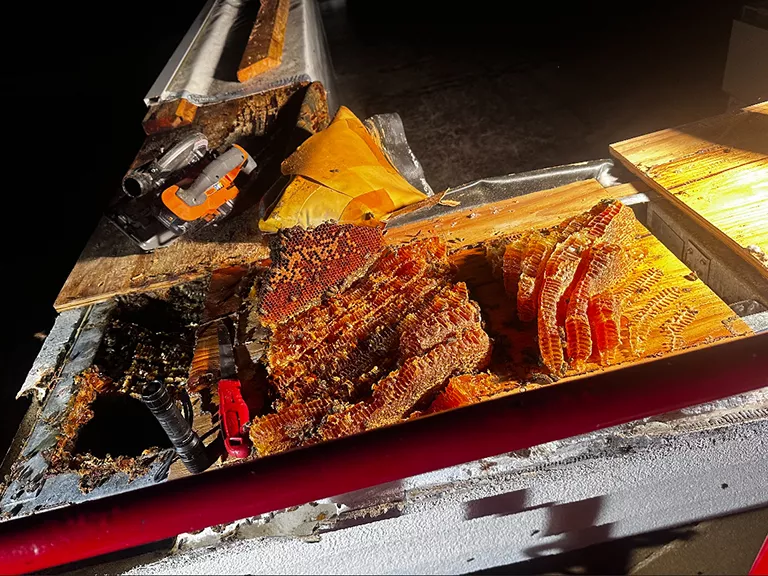
Beyond safety concerns, bee infestations can cause significant damage to commercial buildings. Honey bee colonies nesting inside walls or ceilings produce honey and wax that accumulate over time. As temperatures rise, honey can seep into drywall, insulation, and structural materials.
This buildup creates long-term damage and attracts other pests. Ants, cockroaches, and stored product insects are commonly drawn to honey residue. These secondary infestations compound the original problem and expand the scope of pest control needs. Dead bees and bee detritus left inside wall cavities also lead to odor issues that are difficult and costly to correct.
If the honeycomb is left unprotected and allowed to ferment, additional pests, such as flies, maggots, and rats, will invade the building walls.
In heritage properties, listed buildings, or older retail structures, damage can be even more severe. Repairs often require invasive access to remove hives and clean contaminated materials, increasing restoration costs.
Liability Issues for Commercial Property Owners
The hazards and liability of bees near retail space extend directly into legal and financial risk. Safety laws require commercial property owners to take reasonable steps to address known hazards. Once bee-related issues are observed or reported, failure to act can expose owners and managers to claims.
Liability may arise from customer injuries, employee exposure, or repeated complaints that go unaddressed. In multi-tenant retail centers, responsibility may fall to the property owner, the management company, or the tenant, depending on lease agreements and maintenance obligations. Regardless, risk management plans should account for bee problems before they escalate.
Why Bee Removal Requires Professional Handling
Bee removal is not a do-it-yourself task in commercial environments. Honey bees are important pollinators, and in many cases live honey bee removal is the best course of action. Improper attempts to eliminate hives can trigger swarms, increase aggressive behavior, and worsen public safety risks.
Repeated hammer blows, spraying, or sealing entry points without removing the colony often force bees deeper into the building. This can lead to future swarms, larger infestations, and increased damage. A qualified, licensed professional with experience in bee removal services understands how to identify the queen, remove colonies correctly, and prevent re-entry.
Preventing Future Bee Infestations
Bee removal is not a do-it-yourself task in commercial environments. Honey bees are important pollinators, and in many cases live honey bee removal is the best course of action. Improper attempts to eliminate hives can trigger swarms, increase aggressive behavior, and worsen public safety risks.
Repeated hammer blows, spraying, or sealing entry points without removing the colony often force bees deeper into the building. This can lead to future swarms, larger infestations, and increased damage. A qualified, licensed professional with experience in bee removal services understands how to identify the queen, remove colonies correctly, and prevent re-entry.
Bee Control for Retail and Commercial Properties in Florida
Wildlife Works provides bee removal and exclusion services for commercial properties across Florida. We work with retail centers, civic buildings, and mixed-use developments to address honey bee infestations, remove colonies, and protect buildings from future swarms and secondary pests.
If you are dealing with buzzing near entrances, visible hives, or ongoing bee-related issues, early action can reduce damage, liability, and disruption to your business.
Take Action Before Bees Become a Liability
Bees near retail space are not just an inconvenience. They present real safety risks, structural damage, and legal exposure.
Contact Wildlife Works to schedule a professional assessment and protect your property, customers, and business reputation before the problem grows.
Need Help?
Call Now: 352-717-8727
Don’t wait for wildlife or pest problems to escalate. Get expert help today.