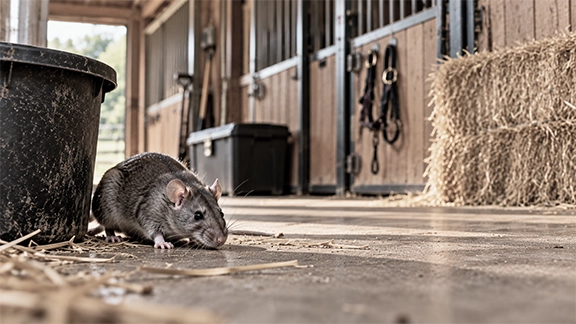
Horse barns provide many of the things rats and mice need to thrive: food, water, shelter, warmth, and nesting material. Feed rooms, tack rooms, stalls, storage areas, and farm buildings can all become attractive environments for rodents.
Effective rodent control for horses requires more than placing a few traps around the barn. A comprehensive approach should reduce the existing rodent population while addressing feed storage, sanitation, entry points, nesting areas, and the safety of horses, pets, livestock, wildlife, and people.
Wildlife Works provides professional rodent control for horse farms, barns, stables, and equine facilities throughout Central Florida.
Why Are Rodents Attracted to Horse Barns?
A horse barn can provide rodents with dependable food and safe shelter throughout the year. Horse feed, grain, spilled feed, pet food, hay, and even small amounts of food left around a feed room can support a growing rodent population.
Barns also contain abundant nesting material. Rats and mice may use shredded feed bags, paper, insulation, fabric, or other soft materials to build nests. Tack rooms and storage areas containing saddle pads, leg wraps, blankets, and other materials can provide additional places to hide.
What Rodents Are Common Around Florida Horse Farms?
Roof rats, Norway rats, and house mice can all create pest problems around Florida properties. Their behavior differs, which is one reason proper identification is important.
Roof rats are excellent climbers and may use trees, fences, roofs, rafters, and overhead structures to access a barn. Norway rats tend to remain closer to the ground and may burrow around farm buildings. House mice can squeeze through remarkably small openings—approximately ¼ inch wide—making gaps around doors, walls, pipes, and utility penetrations potential entry points.
What Are the Signs of Rodents in a Horse Barn?
Common signs of a rodent problem include rodent droppings, gnaw marks, damaged feed bags, spilled grain, scratching noises at night, nests, rub marks, and chewed materials. Horse owners may also notice activity around the feed room, tack room, barn aisle, storage areas, or other locations where food and shelter are available.
Chewing can cause significant damage to electrical wiring, insulation, containers, equipment, and building materials. Rodents can also contaminate feed and surfaces with urine and droppings and may carry diseases that pose risks to people and other animals.
How Do Rodents Get Into Barns?
Barns can be particularly difficult to rodent-proof because they are designed for ventilation and frequent movement of horses, people, equipment, and supplies.
Rodents may enter through gaps beneath doors, damaged walls, roof openings, vents, spaces around water pipes or utilities, and other structural holes. Rats and mice can also use nearby vegetation, stored materials, fences, and adjoining farm buildings for access and shelter.
A thorough inspection helps identify both active rodent areas and the entry points that need attention.
How Can You Keep Rodents Out of Horse Feed?
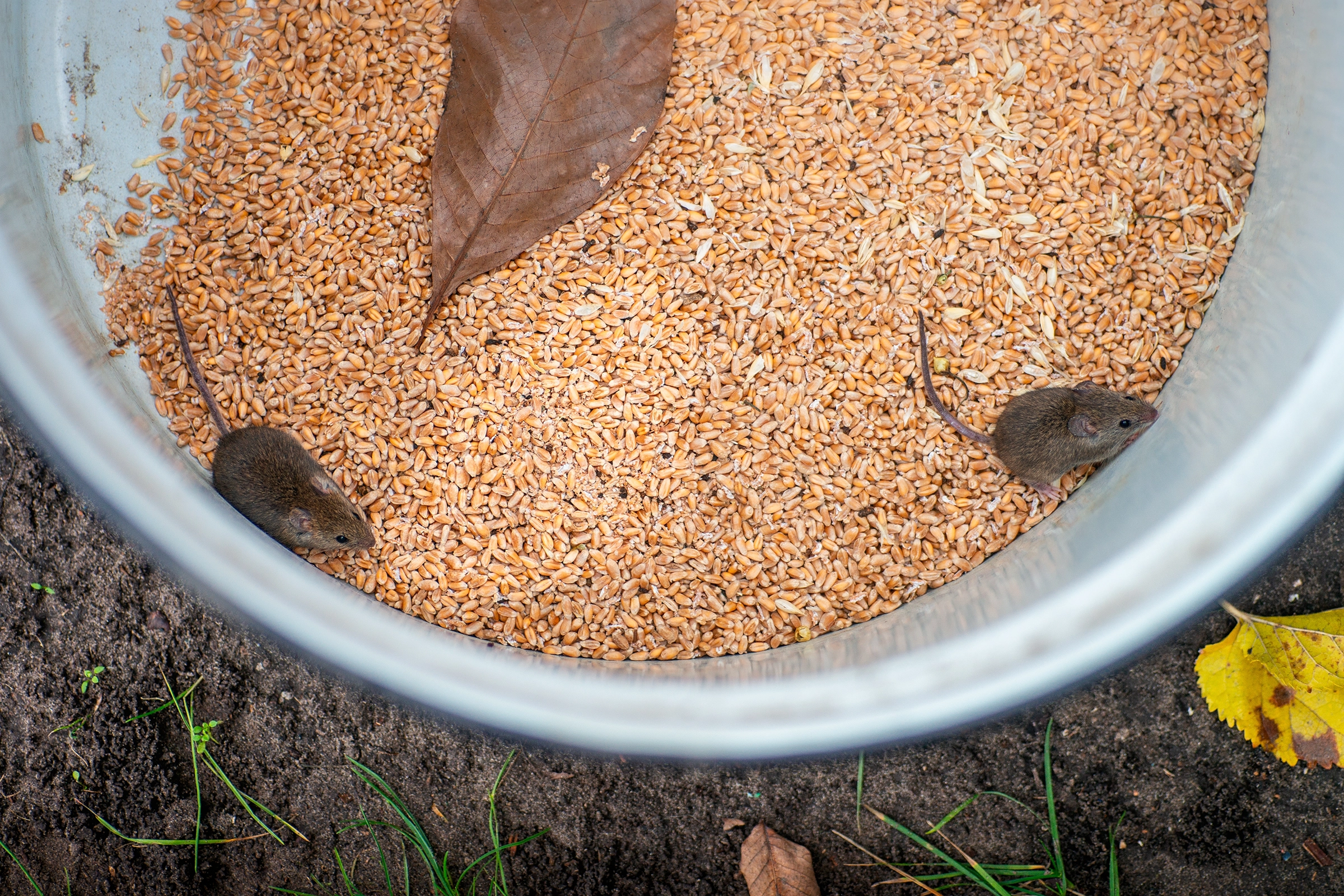
Feed management is one of the most important parts of rodent control in horse barns. Store horse feed and grain in durable containers with secure lids rather than leaving rodents access to feed bags. Clean spilled grain and feed promptly, keep the feed room organized, and avoid leaving pet or livestock food accessible overnight.
Reducing food availability doesn’t eliminate an established infestation by itself, but it removes one of the primary reasons rodents remain in a barn.
How Does Professional Rodent Control for Horses Work?
Successful rodent control for horses and equine centers should combine several strategies rather than relying on one control method.
1-Inspect the Barn and Surrounding Area
The first step is identifying droppings, nests, gnaw marks, travel routes, feeding areas, entry points, and other evidence of rodent activity. The surrounding area should also be evaluated for tall grass, vegetation, debris, stored materials, and other conditions that provide rodents with shelter.
2-Identify the Rodent Problem
Knowing whether the property has rats, mice, or both helps determine where the animals are likely to travel and nest and which control methods may provide an effective solution.
3-Reduce the Rodent Population
Depending on the situation, rodent control may include appropriately placed snap traps, bait stations, or other professional control methods. Any traps or bait used around an equine facility must be considered in relation to horses, dogs, cats, livestock, wildlife, and people who use the property.
4-Address Entry Points
Physical barriers and rodent-resistant materials can be used to close appropriate holes and gaps. Potential entry points may include doors, vents, wall openings, rooflines, and gaps around pipes and utilities.
5-Reduce Food, Water, and Shelter
Secure feed, clean spilled grain, remove unnecessary clutter and nesting material, address accessible water sources where practical, and maintain vegetation around farm buildings.
6-Continue Monitoring
Long-term rodent management requires continued monitoring. New droppings, gnaw marks, damaged feed bags, or other evidence can indicate that rodents have returned or discovered another way into the building.
Are Bait Stations Safe Around Horses?
Bait stations can be part of a rodent-control program, but their use around horses and other animals requires careful consideration. The appropriate method depends on the barn layout, rodent activity, animal access, and the specific product being used.
EPA requires certain rodenticides to be secured in tamper-resistant bait stations when they are used in areas accessible to children, pets, or non-target wildlife. All rodent-control products should be used according to their labels.
For equine facilities, the safest approach is a comprehensive rodent-management plan that combines appropriate control methods with sanitation, feed management, exclusion, and monitoring rather than relying solely on poison or bait.
What About Snap Traps and Glue Traps?
Snap traps can be effective for rats and mice when properly selected and positioned in areas of known rodent activity. In horse barns, trap placement must also prevent horses, pets, and other animals from accessing them.
Glue traps have important limitations and should not be considered a complete rodent-control solution. Regardless of the type of trap used, trapping alone does not address the food, shelter, or entry points that allowed the infestation to develop.
Do Barn Cats Control Rats and Mice?
A barn cat may catch individual mice or rats, but cats alone rarely provide comprehensive rodent control. Rodents can reproduce quickly and may hide or nest in walls, ceilings, storage areas, feed rooms, and other spaces cats cannot easily access.
Cats are also another reason rodent-control methods must be selected carefully. A good long-term program should protect barn cats and other animals while addressing the conditions that support the rodent population.
How Can You Rodent-Proof a Horse Barn?
Complete exclusion can be challenging in an open barn, but reducing access can still make a significant difference. Repair damaged doors and walls, seal appropriate gaps around pipes and utilities, screen suitable openings, and use physical barriers or rodent-resistant materials where practical.
Around the barn, reduce unnecessary debris and hiding areas, maintain tall grass and vegetation, and inspect adjoining farm buildings for rodent activity. Inside, store feed securely and keep tack rooms, feed rooms, and storage areas organized.
Why Long-Term Rodent Management Matters
Removing the rodents currently present solves only part of the problem. If horses provide access to far more feed than rodents could naturally find nearby, and the property continues to provide water, shelter, nesting sites, and entry points, another infestation can develop.
Long-term rodent management combines population control, feed management, sanitation, physical exclusion, habitat modification, and ongoing monitoring. This comprehensive approach helps make the property less attractive and less accessible to rats and mice.
Wildlife Works' Experience With Rodents in Florida Barns
Wildlife Works has first-hand experience solving rodent problems in Florida barn environments.
During one documented barn project, our technician found an active rat infestation involving multiple rats, rodent droppings, rub marks, nesting areas, and activity around stored materials. Wildlife Works addressed the active infestation and provided the property owner with recommendations for exclusion and long-term prevention.
Real-world experience matters because every equine property is different. Barn construction, feed storage, animal access, vegetation, surrounding buildings, and daily operations all influence the best rodent-control strategy.
When Should Horse Owners Call a Rodent Control Professional?
Professional assistance may be appropriate when rodents repeatedly return, feed is being contaminated, droppings continue to appear, electrical wiring or equipment is being damaged, entry points are difficult to locate, or traps aren’t controlling the infestation.
A professional inspection can help determine the extent of the rodent problem and develop a treatment plan that considers both effective rodent control and protecting horses and other animals on the property.
Rodent Control for Horse Farms in Central Florida
Wildlife Works provides professional rodent control for horses, horse barns, farms, stables, and equine centers throughout Central Florida. We understand that managing rodents around horses requires a different approach from treating a typical residential infestation.
Our goal is to identify why rats or mice are on the property, reduce the active rodent population, address food and shelter sources, identify entry points, and develop practical strategies for long-term rodent management.
Need Help With Rodents Around Your Horses?
If rats or mice are causing problems at your horse farm, barn, stable, or equine facility, contact Wildlife Works for professional rodent control in Central Florida.
Need Help?
Call Now: 352-717-8727
Don’t wait for wildlife or pest problems to escalate. Get expert help today.
Request Your Free Inspection.
Sources & Expert Review
Reviewed Against: CDC rodent-control guidance; EPA rodent-control and rodenticide safety guidance; UF/IFAS guidance for rodent management around Florida homes and farms; and Wildlife Works’ documented Central Florida field experience.
Wildlife Works Field Evidence: Rat Removal at Florida Barn – Efficient Infestation Control in Storage Areas
Last Reviewed: September 2026
Next Review: September 2027, or sooner if authoritative guidance changes.