Preventing rats and mice is easier and more effective when you address the conditions that attract them before they become a serious rodent problem. Rodents look for three basic things: food, water, and shelter. They also need a way to get inside.
Effective rodent prevention combines sanitation, habitat modification, regular inspection, and rodent exclusion—identifying and sealing the entry points rats and mice use to access a structure.
Wildlife Works provides professional rodent prevention and exclusion services for homes, businesses, farms, barns, and other properties throughout Central Florida.
What Is Rodent Exclusion?
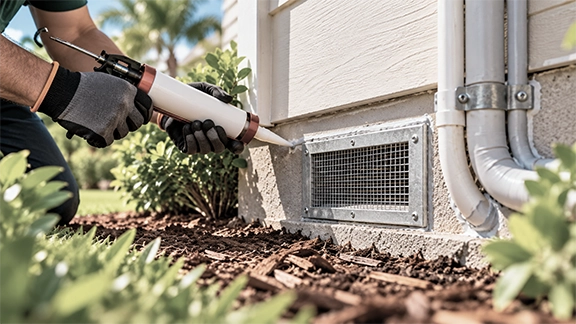
Rodent exclusion is the process of identifying and sealing gaps, holes, cracks, and other openings that allow rats and mice to enter a building.
It is an important part of long-term rodent control because removing existing rodents does not prevent other rodents from using the same entry points in the future.
Professional exclusion focuses on finding both obvious openings and the small, easily overlooked gaps rodents can use to enter a structure.
What Is Integrated Pest Management?
Integrated Pest Management is a long-term pest-management strategy that combines different control and preventive methods while minimizing unnecessary risks to people, animals, and the environment.
For rodent infestations, an IPM program may include:
- Inspection and rodent identification
- Sanitation and removal of food sources
- Habitat modification
- Mechanical control such as trapping
- Carefully selected chemical controls when appropriate
- Rodent exclusion
- Ongoing monitoring
- Preventive measures
The specific combination depends on the property and rodent problem.
How Do Rats and Mice Get Inside?
Rodents can enter through surprisingly small openings. According to the CDC, a mouse can fit through a hole approximately ¼ inch, or 6 millimeters, wide.
Common entry points include:
- Gaps beneath exterior doors and garage doors
- Openings around pipes and utility lines
- Damaged vents or vent covers
- Rooflines, soffits, and eaves
- Gaps around foundations
- Crawl-space openings
- Attic vents
- Damaged screens
- Openings around HVAC equipment
- Gaps where different building materials meet
Roof rats are also excellent climbers and may use trees, fences, utility lines, and other structures to gain access to roofs and attics.
How Does Professional Rodent Exclusion Work?
Inspect the Structure
A thorough inspection is the first step. Wildlife Works looks for possible entry points as well as evidence of rodent activity, including rodent droppings, gnaw marks, rub marks, nesting material, and damaged building materials.
Both the interior and exterior should be evaluated because the location where rodents are discovered inside may be different from where they originally entered.
Identify Active Entry Points
Not every gap is necessarily being used by rodents. Signs such as droppings, grease marks, gnawing, tracks, or nesting activity can help identify areas that require particular attention.
Understanding where rodents are traveling is also important when an active infestation must be addressed before certain openings are sealed.
Seal Gaps and Openings
Appropriate physical barriers can then be used to eliminate gaps and prevent rodents from entering.
Depending on the structure and opening, exclusion materials may include metal mesh, hardware cloth, metal flashing, appropriate sealants, vent covers, weather stripping, or door sweeps. The material should be appropriate for the location and resistant to rodent damage.
Monitor for New Activity
Rodent prevention doesn’t end when entry points are sealed. Regularly checking for new droppings, gnaw marks, damaged materials, or other signs of rodent activity can help identify a new problem before it develops into a larger infestation.
Why Isn't Trapping Alone Enough?
Rat traps, snap traps, bait stations, and other rodent-control methods may help reduce an existing rodent population, but population control and prevention perform different jobs.
If rats or mice are removed while food, water, shelter, and entry points remain available, future infestations are still possible.
A more comprehensive approach combines appropriate rodent control with exclusion, sanitation, habitat modification, and ongoing monitoring. These principles are consistent with an Integrated Pest Management (IPM) approach, which focuses on managing both the pest and the conditions that support it.
How Can You Make Your Property Less Attractive to Rodents?
Eliminate Food Sources
Rodents are attracted to easily accessible food. Keep human food, pet food, livestock feed, and other stored food in tightly sealed containers when practical.
Clean up spilled food and grain promptly, manage food waste carefully, secure garbage cans, and remove fallen fruit around the property. Bird feeders can also become food sources when spilled bird seed accumulates beneath them.
Reduce Water Sources
Rodents need water as well as food. Repair leaking pipes and faucets and eliminate unnecessary standing water where practical.
Around barns and agricultural properties, also look for areas where water consistently collects or where animal watering systems may create accessible water sources.
Reduce Shelter and Hiding Places
Clutter provides rodents with places to hide and nesting material. Remove unnecessary cardboard, shredded paper, debris, and other materials from storage areas, garages, attics, sheds, and other vulnerable locations.
Outside, remove unnecessary debris and maintain wood piles away from structures when practical.
Maintain Vegetation Around Buildings
Tall grass, dense vegetation, shrubs, and tree branches can provide rodents with shelter or access to buildings.
Keeping vegetation maintained and creating separation between plants and structures where practical can make the surrounding area less attractive to rodents. Tree limbs that provide roof access should also be addressed, particularly where roof rats are a concern.
How Can You Prevent Mice From Entering a House?
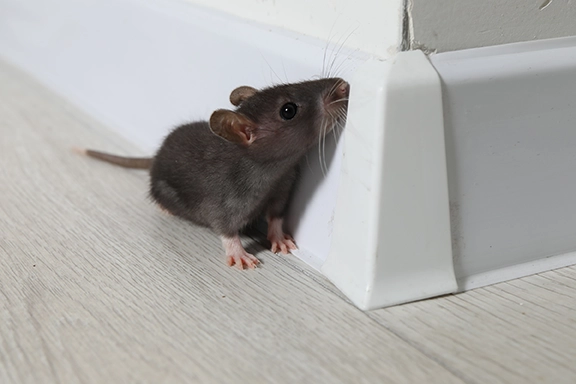
Because mice can enter through very small openings, preventing mice requires careful inspection for small gaps throughout the structure.
Check around exterior doors, garage doors, foundations, pipes, vents, utility penetrations, crawl spaces, attics, and areas where building materials meet. Door sweeps and weather stripping can help close appropriate gaps around doors, while suitable metal mesh or other rodent-resistant materials can protect certain openings.
Simply filling a hole with a material rodents can easily chew may not provide a long-term solution.
How Can You Prevent Rats?
Rat prevention also begins with food, water, shelter, and access.
Secure garbage and food sources, clean up spilled food, reduce hiding places, maintain vegetation, and inspect the building for potential entry points. Roof-rat prevention should include attention to elevated access routes such as trees and rooflines, while ground-level inspection is especially important around foundations, doors, crawl spaces, and utility openings.
Rodent Prevention for Attics and Crawl Spaces
Attics and crawl spaces can provide rodents with quiet, protected shelter.
Prevention may include inspecting rooflines, soffits, vents, foundations, access doors, utility penetrations, and other openings leading into these areas. Damaged vent covers or screens should be repaired with materials appropriate for rodent exclusion.
If rodents are already inside, the active infestation should be considered before exclusion work is completed so animals are not unintentionally trapped within the structure.
Rodent Prevention Around Pets and Other Animals
Pet food, livestock feed, bird seed, and animal water sources can attract rats and mice. Store feed securely, clean spills, and avoid leaving unnecessary food accessible to rodents.
When traps, bait stations, or other pest-control products are needed, their placement and use should account for pets & children, livestock, wildlife, and other non-target animals. Always follow product label instructions.
For horse farms and equine facilities, rodent prevention requires additional consideration because barns naturally contain abundant feed, water, shelter, and access points.
Can Rodent Exclusion Prevent Future Infestations?
No prevention method can guarantee that rodents will never appear on a property. However, sealing entry points and reducing food, water, and shelter can significantly reduce the conditions that allow rodent infestations to develop.
The most effective long-term strategy is proactive: inspect regularly, correct structural vulnerabilities, maintain sanitation, manage the surrounding habitat, and respond promptly when signs of rodent activity appear.
When Should You Call a Rodent Exclusion Professional?
Professional help may be appropriate when:
- Rodents repeatedly return after trapping
- You cannot locate the entry points
- Droppings continue to appear
- Activity is occurring in an attic or crawl space
- Roof rats may be entering from elevated areas
- The building has numerous potential openings
- Previous repairs have not stopped rodents
- The infestation affects a commercial property, farm, or barn
- You need a comprehensive long-term solution
A professional inspection can help distinguish between cosmetic gaps and the openings most likely to contribute to an active rodent problem.
Professional Rodent Prevention & Exclusion in Central Florida
Wildlife Works provides rodent prevention, rodent exclusion, and rodent control services throughout Central Florida.
Our team evaluates the entire property—not simply the location where a rat or mouse was seen. We look for rodent activity, food and water sources, shelter, potential entry points, and property conditions that may contribute to current or future infestations.
The goal is to address the existing problem while helping make your home, business, farm, or other property less accessible and attractive to rats and mice.
Need Help Keeping Rodents Out?
If rats or mice are getting into your property—or you want to prevent them from getting inside—Wildlife Works can help identify potential entry points and develop practical rodent prevention and exclusion solutions.
Need Help?
Call Now: 352-717-8727
Don’t wait for wildlife or pest problems to escalate. Get expert help today.
Request Your Free Inspection.
Sources & Expert Review
Reviewed Against: CDC rodent prevention and exclusion guidance; EPA Integrated Pest Management and rodent-control guidance; UF/IFAS Florida rodent-management guidance; and Wildlife Works’ Central Florida field experience.
Last Reviewed: September 2026
Next Review: September 2027, or sooner if authoritative guidance changes.