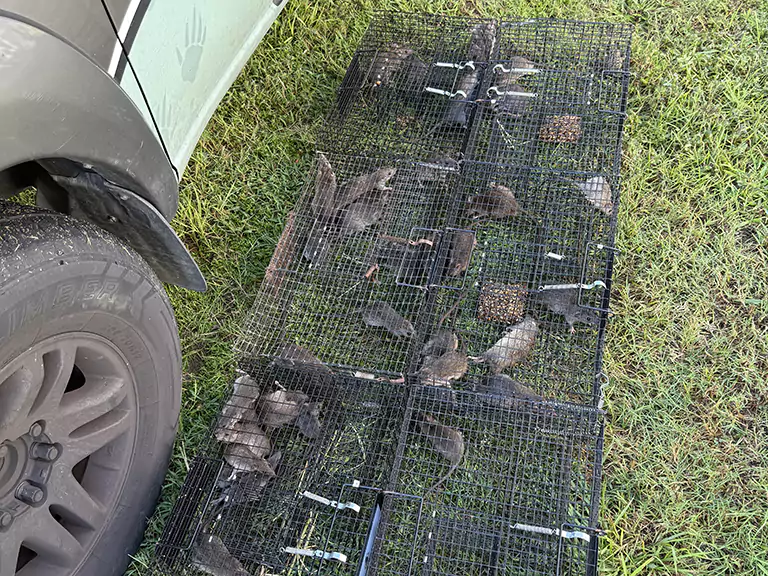
There are many ways to control rats and mice, but no single rodent control method is right for every infestation. The most effective approach depends on the rodent species, size and location of the infestation, property conditions, and potential risks to people, pets, livestock, and wildlife.
Professional rodent control often combines multiple methods rather than relying on a single trap or product. Wildlife Works uses inspection, population control, sanitation, exclusion, and monitoring to develop practical rodent-management solutions for Central Florida properties.
What Is the Most Effective Rodent Control Method?
Effective rodent control uses a comprehensive approach that addresses both the existing rodent population and the conditions supporting it.
Simply removing rats and mice may provide temporary relief. If food and water sources, shelter, nesting areas, or entry points remain available, future infestations can occur.
For this reason, professional pest management often follows an Integrated Pest Management (IPM) approach.
What Is Integrated Pest Management?
Integrated Pest Management is a long-term pest-management strategy that combines different control and preventive methods while minimizing unnecessary risks to people, animals, and the environment.
For rodent infestations, an IPM program may include:
- Inspection and rodent identification
- Sanitation and removal of food sources
- Habitat modification
- Mechanical control such as trapping
- Carefully selected chemical controls when appropriate
- Rodent exclusion
- Ongoing monitoring
- Preventive measures
The specific combination depends on the property and rodent problem.
Why Is Inspection the First Step?
Before selecting a control method, it is important to understand what rodent is present, where it is active, and why it is there.
A professional inspection may look for rodent droppings, gnaw marks, nesting areas, food and water sources, travel routes, structural damage, and entry points.
Fresh or new droppings can help identify areas of current rodent activity, while gnaw marks, nesting material, and rub marks can provide additional clues.
How Do Snap Traps Work?
Snap traps are mechanical traps designed to kill rats or mice when the trap is triggered. They are one of the most established methods for controlling rodents inside buildings.
Successful trapping depends heavily on correct placement. Traps should be selected for the rodent involved and positioned where evidence indicates rats or mice are actually traveling.
Snap traps also allow the captured rodent to be located and removed rather than potentially dying in an inaccessible area.
Are Electronic Rodent Traps Effective?
Electronic traps are another form of mechanical control. They are designed to kill a rodent with an electric shock after it enters the device.
Like other traps, their effectiveness depends on correct placement, the rodent species involved, and whether the animals encounter and enter the device. An electronic trap still addresses the existing rodent population rather than the food, shelter, or entry points contributing to the infestation.
What Are Live Rodent Traps?
Live traps capture rats or mice without immediately killing them. Some devices capture a single animal, while multiple-catch traps may capture several mice.
Live trapping creates additional considerations, including frequent trap monitoring and what happens to the captured animal afterward. It also does not address the underlying conditions attracting rodents to the property.
What About Glue Traps?
Glue traps capture rodents on an adhesive surface rather than using a mechanical strike.
Although glue traps are available for rodent control, they have significant disadvantages. They can cause prolonged distress and may accidentally capture non-target animals. For these reasons, they should not be viewed as a complete or universally appropriate rodent-control solution.
How Do Rodent Bait Stations Work?
Bait stations are enclosed devices designed to hold rodent bait while limiting access to the bait itself. Depending on the product and location, tamper-resistant bait stations may help reduce access by children, pets, wildlife, and other non-target animals.
Bait stations must be selected, positioned, and maintained appropriately, and rodenticide products must always be used according to their label instructions.
What Are the Risks of Rodenticides?
Rodenticides can be effective tools in some rodent-management situations, but they also require careful use.
Potential concerns include primary poisoning when a person or non-target animal directly consumes the bait and secondary poisoning when another animal consumes a poisoned rodent. Rodenticides can also result in dead rodents in walls, attics, crawl spaces, or other inaccessible locations.
These risks are particularly important on properties with children, pets, domestic animals, livestock, or wildlife.
Why Isn't Poison Alone a Long-Term Solution?
Poisoned rodents may be removed from the population, but rodenticide does not seal a hole, remove spilled food, repair a water leak, or eliminate a nesting site.
If the environmental conditions supporting the infestation remain unchanged, other rodents may eventually take their place.
That is why bait or other population-control methods, when appropriate, should be considered within a broader rodent-management strategy.
What Role Does Sanitation Play in Rodent Control?
Sanitation helps reduce the food and water sources that attract and sustain rodents.
Useful practices include storing food and pet food securely, cleaning spilled food, managing garbage, repairing leaks, removing unnecessary clutter, and keeping food-preparation and storage areas clean.
Sanitation alone may not eliminate an established rodent infestation, but it makes the environment less supportive of rats and mice and improves the effectiveness of other control methods.
Why Is Rodent Exclusion Important?
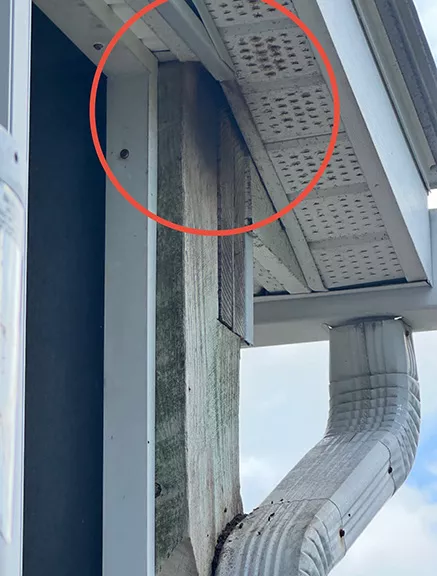
Rodent exclusion means identifying and sealing the entry points rats and mice use to enter a structure.
House mice can enter through openings approximately ¼ inch wide, so small structural gaps can matter. Appropriate metal mesh and other rodent-resistant materials may be used to seal certain openings.
Exclusion addresses a different part of the problem from trapping or baiting: it helps prevent rodents from gaining access in the first place.
What Is Habitat Modification?
Habitat modification means changing environmental conditions that provide rodents with food, water, shelter, or access.
Examples include reducing clutter, removing unnecessary debris, maintaining vegetation, correcting water sources, securing garbage, storing food properly, and trimming tree branches that provide roof access.
These cultural practices can help deter rodents and support long-term prevention.
Do Ultrasonic Devices Repel Rodents?
Ultrasonic devices are marketed as a way to repel rats and mice with high-frequency sound. However, they should not replace established rodent-control methods such as inspection, sanitation, trapping, exclusion, and monitoring.
If a property has an active infestation, identifying why the rodents are present and how they are entering is more important than relying on a repellent device alone.
What About Natural Predators?
Cats, owls, snakes, and other natural predators may consume rats or mice, but predators alone generally do not address the conditions supporting a rodent infestation.
A property that continues to provide abundant food, water, shelter, and entry points can remain attractive to rodents despite the presence of predators.
How Do Professionals Choose a Rodent Control Method?
A professional rodent exterminator or wildlife-control specialist should consider several factors before recommending a control method:
- Rodent species
- Size of the rodent population
- Location of activity
- Property type
- Entry points
- Food and water sources
- Nesting areas
- Presence of children or pets
- Livestock or other domestic animals
- Non-target wildlife
- Environmental conditions
- Previous control attempts
A method appropriate for mice in a residential kitchen may not be appropriate for roof rats in an attic, rodents in a restaurant, or rats around horses in a barn.
Are Rodent Control Methods Different for Homes, Businesses and Farms?
Yes. The basic principles remain similar, but the control methods and management strategy should reflect the property.
Homes may require control of rodents inside walls, attics, kitchens, or garages.
Commercial properties may require additional monitoring, sanitation, and operational considerations.
Horse farms and agricultural properties must account for feed, livestock, open structures, and non-target animals.
What Is the Best Long-Term Rodent Control Strategy?
The strongest long-term approach combines several methods:
Inspect → Identify → Control → Sanitize → Exclude → Monitor
This approach reduces the existing rodent population while addressing the conditions that allowed the infestation to develop.
Regular monitoring is especially important because new food sources, structural damage, vegetation, or other environmental changes can create new opportunities for rats and mice.
Professional Rodent Control in Central Florida
Wildlife Works provides professional rodent control and rodent removal throughout Central Florida.
Rather than automatically using the same control method on every property, our team evaluates the rodent species, level of activity, property conditions, entry points, and potential risks before developing a treatment plan.
Our goal is not simply to get rid of the rats or mice you can see. It is to understand the rodent problem and develop an effective solution that supports long-term prevention.
Need Help Choosing the Right Rodent Control Method?
If traps, bait, or other DIY methods haven’t solved your rodent problem, Wildlife Works can inspect the property and determine an appropriate approach.
Need Help?
Call Now: 352-717-8727
Don’t wait for wildlife or pest problems to escalate. Get expert help today.
Request Your Free Inspection.
Sources & Expert Review
Reviewed Against: EPA Integrated Pest Management and rodenticide guidance; CDC rodent-control guidance; UF/IFAS Florida rodent-management guidance; and Wildlife Works’ Central Florida field experience.
Last Reviewed: September 2026
Next Review: September 2027, or sooner if authoritative guidance changes.