
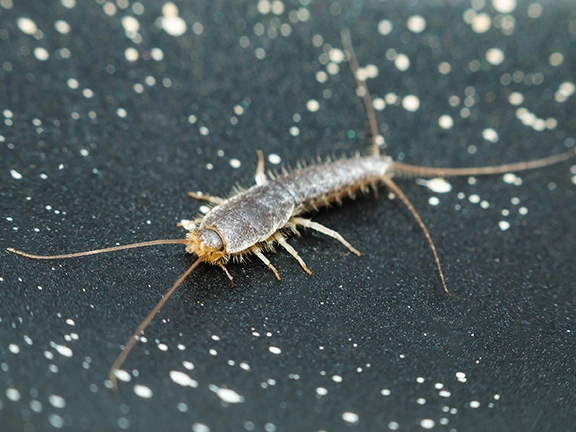
Finding a strange silver bug darting across your bathroom floor or disappearing behind a baseboard can be unsettling. If you’ve been seeing silverfish in your home, you’re probably asking two questions: Are silverfish harmful? and how to get rid of silverfish naturally?
Silverfish are common household pests throughout Florida, especially in damp areas like bathrooms, basements, attics, and closets. While these wingless insects don’t bite or spread disease, a silverfish infestation can damage household materials and may indicate excess moisture inside your home.
Understanding why silverfish are attracted to your home and how to prevent them from returning can help protect both your belongings and your property.
What Are Silverfish?
Silverfish are small, wingless insects that get their name from their silvery color and fish-like movements. Unlike many other household pests, silverfish are nocturnal, meaning they hide during the day and become active at night.
These insects thrive in damp areas because they require humidity to survive. Silverfish often hide:
- In bathrooms
- Along baseboards
- Inside closets
- In attics
- In basements
- Behind wallpaper
- Inside cracks and crevices
Silverfish and firebrats are closely related insects that prefer warm, humid environments. While firebrats tolerate higher temperatures, both species are attracted to the moisture found in many Florida homes.
Are Silverfish Harmful?
The good news is that silverfish don’t pose a serious health risk.
Silverfish don’t bite or spread disease, and they aren’t considered poisonous to people, children, or pets. Although homeowners sometimes worry about a silverfish bite, these insects lack the ability to bite or sting humans.
However, that doesn’t mean a silverfish problem should be ignored.
Silverfish feed on starchy materials such as paper, wallpaper paste, book bindings, cardboard, fabrics, and glue. Over time, a growing silverfish infestation may damage valuable books, important documents, stored clothing, and other household materials.
For some people, large infestations may also contribute to allergic reactions from shed skins or insect debris.
What Attracts Silverfish?
If you’re seeing silverfish in your bathroom or other areas of your home, there’s usually an underlying reason.
Silverfish are attracted to:
- High humidity
- Damp areas
- Water leaks
- Poor ventilation
- Dark places
- Cardboard storage
- Paper products
- Starchy materials
Bathrooms, laundry rooms, crawl spaces, basements, and attics often provide the moisture silverfish love. They are especially attracted to the moisture found around plumbing fixtures, under sinks, and in areas where condensation develops.
Reducing humidity is often the first step toward getting rid of silverfish naturally.
Signs of a Silverfish Infestation
Occasionally seeing a silver fish doesn’t always indicate a major infestation, but repeated sightings should not be ignored.
Common signs of silverfish include:
- Finding silverfish at night
- Small holes in wallpaper or paper products
- Damage to book bindings
- Activity along baseboards
- Shed skins
- Insects hiding in dark places
- Silverfish in the bathroom, basement, or closet
Because silverfish are active at night and hide during the day, homeowners often don’t realize how many insects are present until the infestation grows.
How to Get Rid of Silverfish Naturally
Many homeowners want to find out how to get rid of silverfish naturally before considering professional pest control.
Natural methods that may help get rid of silverfish include:
- Using a dehumidifier to reduce indoor humidity
- Sealing cracks and crevices where silverfish hide
- Storing paper items in sealed containers
- Removing cardboard storage when possible
- Improving ventilation in damp areas
- Repairing plumbing leaks
Some homeowners also use methods like diatomaceous earth or boric acid to help kill silverfish. These products may help eliminate silverfish in certain situations, but they work best when combined with moisture control.
While insect spray may kill visible insects, sprays rarely solve the underlying silverfish problem if humidity and food sources remain.
How to Prevent Silverfish From Returning
The best way to keep silverfish away is to eliminate the conditions they need to survive.
To help prevent silverfish:
- Reduce indoor humidity
- Repair leaks promptly
- Keep bathrooms and basements dry
- Store food and paper products in sealed containers
- Remove clutter from closets and storage areas
- Vacuum regularly along baseboards
- Inspect areas where silverfish are often found
Simple home improvement projects that reduce moisture can go a long way toward preventing future infestations.
When Professional Pest Control May Be Necessary
If you’re dealing with a silverfish infestation in your home despite your best efforts, it may be time to contact a professional pest control company.
Professional pest control may be recommended when:
- Silverfish continue appearing after treatment
- Large numbers are found throughout the home
- Moisture problems cannot be located
- Damage to household materials continues
- Other pests are also present
An experienced exterminator can identify the conditions attracting silverfish, recommend the most effective silverfish control strategy, and help protect your home from recurring infestations.
Why Early Silverfish Control Matters
Although silverfish aren’t dangerous and don’t bite or spread disease, they can become a persistent nuisance if left untreated. Because these pests thrive in damp conditions, recurring silverfish activity often signals excess moisture that may attract additional insects.
Addressing a silverfish problem early by reducing humidity, eliminating hiding places, and improving sanitation can help prevent them from returning and protect your home from unnecessary damage.
At Wildlife Works, we help Florida homeowners identify pest concerns, locate the moisture conditions attracting silverfish, and provide professional pest control solutions designed to eliminate infestations and keep homes protected year-round.
Need Help?
Call Now: 352-717-8727
Don’t wait for wildlife or pest problems to escalate. Get expert help today.