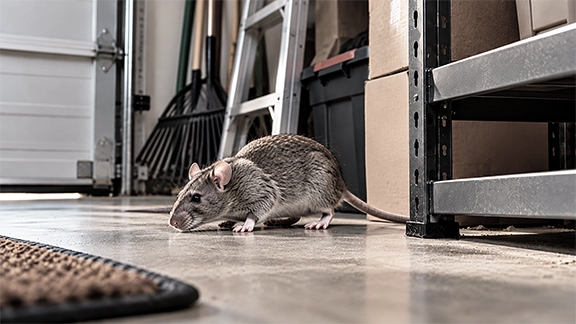
Rats and mice can enter Florida homes looking for food, water, and shelter. Once inside, they may establish nesting areas in attics, walls, garages, storage areas, kitchens, and other quiet spaces.
Effective rodent control for homes requires more than removing the rat or mouse you happen to see. Professional rodent control should identify the type of rodent, determine where it is active, address the existing population, locate potential entry points, and help prevent future infestations.
Wildlife Works provides professional residential rodent control and rodent removal services throughout Central Florida.
What Rodents Are Common in Florida Homes?
Roof Rats
Roof rats are excellent climbers and are a common rodent problem in Florida. They may use trees, fences, utility lines, and other elevated routes to gain access to roofs and attics. Once inside, they can establish nesting areas in attics, ceilings, and wall spaces.
House Mice
House mice can gain access through remarkably small openings. According to the CDC, mice can fit through a hole approximately ¼ inch, or 6 millimeters, wide. Their small size allows them to enter through gaps around doors, pipes, vents, utility lines, and other openings.
Norway Rats
Norway rats are larger and more ground-oriented than roof rats. They may be found around foundations, garages, storage areas, garbage, landscaping, and other locations that provide dependable food and shelter.
What Are the Signs of Rodents in Your Home?
Because most rodents are primarily nocturnal, you may notice evidence of rodent activity before seeing an actual rat or mouse.
Common signs of rodents include small dark droppings, gnaw marks, scratching sounds, damaged food packaging, nesting material, unusual odors, and greasy rub or smudge marks along frequently traveled areas. Rodents may use shredded paper, fabric, insulation, and other soft materials to build nests.
Scratching or movement inside walls or ceilings—especially at night—can also indicate rodent activity.
Where Do Rodents Hide Inside Homes?
Rats and mice prefer locations where they can remain relatively undisturbed and close to food, water, or shelter. Common hiding and nesting areas include:
- Attics
- Inside walls and ceilings
- Garages
- Crawl spaces
- Kitchens and pantries
- Utility rooms
- Cabinets
- Closets
- Storage areas
- Areas behind appliances
Finding droppings or damage in one room does not necessarily mean the rodents are nesting nearby. A thorough inspection can help determine where rodents are traveling and where the primary activity is occurring.
Why Are Rats and Mice a Problem?
Rodents are more than just a nuisance. They can create health risks, food contamination, and property damage inside a home.
Rats and mice can contaminate food and surfaces with urine, droppings, saliva, and nesting materials. The CDC identifies diseases that can spread to people directly or indirectly through rodents and their waste.
Rodents also gnaw frequently. They can damage food packaging, insulation, wood, stored belongings, and electrical wiring. Chewed electrical wiring can create a potential fire hazard.
What Attracts Rodents to a Home?
Rodents stay where they can reliably find food, water, and shelter.
Common food and water sources include pet food, food scraps, dirty dishes, unsecured garbage, bird seed, fallen fruit, leaking plumbing, and improperly stored pantry items. Outside, compost piles, garbage cans, dense vegetation, debris, and other sheltered areas can also attract rats and mice.
Store food and pet food in tightly sealed containers when practical, clean spills and crumbs promptly, manage garbage carefully, and repair water leaks.
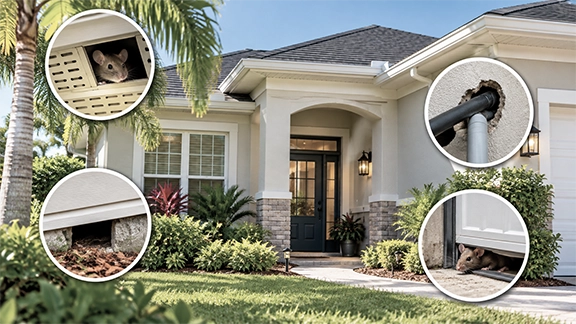
How Do Rats and Mice Get Into a House?
Rodents can gain access through small openings around the exterior of a home. Common entry points include:
- Gaps beneath doors and garage doors
- Openings around pipes and utilities
- Rooflines, soffits, and eaves
- Damaged vents or screens
- Gaps around foundations
- Crawl-space openings
- HVAC penetrations
- Areas where building materials meet
Tree branches touching or overhanging a roof can also provide access for roof rats.
Finding and sealing entry points is an important part of preventing rodents from returning after an active infestation has been addressed.
How Does Professional Rodent Control Work?
1-Inspect for Rodent Activity
Effective rodent control services begin with a thorough inspection. A rodent control professional may look for droppings, gnaw marks, nesting areas, food sources, travel routes, damaged materials, and possible entry points.
2-Correctly Identify the Rodent
Correct identification matters because roof rats, Norway rats, and house mice have different behaviors and nesting preferences. Knowing which rodent is present helps determine the appropriate treatment plan.
3-Reduce and Remove the Rodent Population
Depending on the infestation and property, professional rodent removal may involve snap traps, bait stations, or other appropriate control methods.
Trap and bait placement should reflect where rodents are actually traveling while also considering children, pets, wildlife, and other non-target animals.
4-Address Entry Points
Removing existing rats or mice without addressing how they entered can leave the home vulnerable to future infestations.
Rodent exclusion may involve sealing appropriate openings with metal mesh, flashing, or other rodent-resistant materials.
5-Reduce Food, Water, and Shelter
Sanitation is an important part of long-term rodent control. Securing food, pet food, and garbage; repairing leaks; cleaning spills; and reducing clutter can make the home less attractive to rodents.
6-Monitor for Future Activity
Regular inspections can help identify new rodent activity before another large infestation develops. Watch for fresh droppings, gnaw marks, scratching sounds, damaged food packaging, or other unusual signs.
What Should You Do About Rodent Droppings?
Avoid sweeping or vacuuming dry rodent droppings or nesting material. The CDC recommends wetting contaminated material with an appropriate disinfectant before wiping it up and taking suitable protective precautions.
If droppings reappear after an area has been properly cleaned, that can indicate ongoing rodent activity.
Heavy infestations or extensive contamination in attics, crawl spaces, insulation, or other difficult areas may require additional precautions.
Are Rodent Traps Effective?
Rodent traps can be useful for controlling rats and mice, particularly when they are correctly selected and placed near known areas of rodent activity.
However, traps address the rodents already present—not necessarily the conditions that caused the infestation. If food and water sources remain available or entry points remain open, removing individual rodents may not provide a long-term solution.
Effective home rodent control combines population reduction, sanitation, exclusion, and monitoring rather than relying on traps alone.
What About Bait Stations?
Tamper-resistant bait stations may be used as part of some professional rodent-control programs. Their suitability depends on the infestation, property, placement, and presence of children, pets, wildlife, and other animals.
Rodenticide products should always be used according to label instructions and applicable EPA requirements. A professional can determine whether bait stations are appropriate for a particular rodent problem or whether other control methods are preferable.
How Can You Prevent Future Rodent Infestations?
The best preventative measures address the same conditions that attract rodents in the first place.
Keep food and pet food securely stored, manage garbage, repair leaks, reduce clutter and nesting material, maintain vegetation around the home, and regularly inspect the exterior for new gaps or damage. If you discover possible entry points, use appropriate rodent-resistant materials to correct them.
Preventing future infestations requires an ongoing combination of sanitation, exclusion, property maintenance, and monitoring.
When Should You Call a Rodent Control Professional?
Professional rodent control may be appropriate when:
- Rodent droppings repeatedly appear
- You hear scratching sounds inside walls or ceilings
- Rats or mice are entering the attic or crawl space
- Food is being contaminated
- Wiring or other materials are being damaged
- You cannot locate the entry points
- DIY traps have not resolved the problem
- Rodents return after previous removal
- You suspect a large infestation
A professional inspection can help determine the species involved, extent of the infestation, nesting and travel areas, possible entry points, and appropriate treatment options.
Professional Rodent Control for Central Florida Homes
Wildlife Works provides expert rodent control services for homeowners throughout Central Florida. Our team has experience with the roof rats, house mice, Norway rats, and other rodent problems found in Florida homes.
Rather than focusing only on the rat or mouse that was seen, we look at the larger problem: Where are the rodents active? How are they getting inside? What is attracting them? What needs to be done to remove them and reduce the risk of another infestation?
That comprehensive approach combines professional rodent removal with practical recommendations for exclusion, sanitation, and long-term prevention.
Need Help Getting Rid of Rodents?
If you’re seeing signs of rats or mice in your home, Wildlife Works can help identify the problem and develop an appropriate rodent-control plan.
Need Help?
Call Now: 352-717-8727
Don’t wait for wildlife or pest problems to escalate. Get expert help today.
Request Your Free Inspection.
Sources & Expert Review
Reviewed Against: CDC rodent-control and cleanup guidance; EPA rodent-control and Integrated Pest Management guidance; UF/IFAS Florida rodent-management guidance; and Wildlife Works’ Central Florida field experience.
Last Reviewed: September 2026
Next Review: September 2027, or sooner if authoritative guidance changes.