
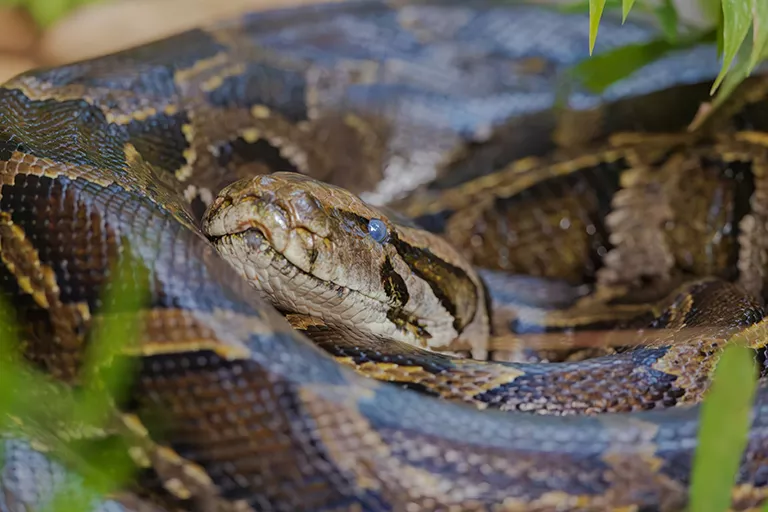
Florida homeowners are seeing headlines about giant Burmese pythons being captured in new areas, and many are wondering: How far north are pythons in Florida, and could they reach Central Florida?
The concern is understandable. Burmese pythons are large snakes—some over 15 feet long—and capable of preying on pets, farm animals, and native wildlife. They are an invasive species that became established in South Florida after years of releases from the pet trade and escapes from captivity.
Although pythons have caused major ecological changes in the Florida Everglades, the question remains: Are they spreading north—and if
Burmese Pythons in Florida: Background and Origin
Burmese pythons (Python bivittatus) originate from the warm, tropical regions of Southeast Asia. Their ability to thrive in Florida is directly tied to the state’s similar climate. Over the past several decades, released or escaped captive animals contributed to the establishment of a breeding population in the Florida Everglades and surrounding areas.
The result has been one of the most impactful invasive species events in U.S. history.
These invasive Burmese pythons prey on native species, including mammals, birds, reptiles, and even alligators, drastically altering the Everglades ecosystem. Tens of thousands of pythons are estimated to live in South Florida today.
But how far north are they really going?
How Far North Are Pythons in Florida Right Now?
According to state and university research, the established python range is still firmly in South Florida, with the northern boundary remaining south of Lake Okeechobee.
Documented populations and frequent captures continue in:
Collier County
Eastern Collier County
Western Broward County
South Fort Myers
Cape Coral
Pine Island
Areas south of the Caloosahatchee River
These sightings include everything from six-foot Burmese pythons to record-breaking captures publicized in media reports such as the Naples Daily News.
Despite occasional isolated sightings elsewhere, there is no evidence of a stable, reproducing python population north of the Caloosahatchee River or north of Lake Okeechobee.
Why Pythons Can’t Spread Much Further North (Yet)
The biggest limiting factor for python expansion is cold temperatures. Burmese pythons are tropical animals that cannot tolerate long exposure to cold weather. During cold snaps, they experience stress, illness, or death.
Florida’s northern and central regions experience enough extended periods of cold weather in winter to prevent pythons from establishing permanent populations.
Other limiting factors include:
Insufficient year-round warm temperatures
Unsuitable winter conditions for feeding
Habitat differences compared to the Everglades
Increased mortality during Florida’s cold fronts
Climate models suggest that only areas with a suitable climate year-round would allow long-term survival. Currently, that climate zone remains in South Florida.
How Far North Could Pythons Eventually Spread?
Research organizations including the Florida Fish and Wildlife Conservation Commission and university scientists have modeled possible expansion scenarios.
While climate change may gradually warm Central Florida, the most northern areas that might become suitable (in decades, not years) include:
The Port Charlotte area
Border regions of Central Florida below the frost line
Regions near the northern edge of South Florida where temperatures remain mild
However, current climatic conditions still restrict pythons primarily to the Everglades and nearby counties.
Even though media reports sometimes suggest rapid spread, scientific data shows the python population remains concentrated in southern Florida, not the rest of the state.
What Pythons Eat and Why It Worries Homeowners
Burmese pythons are powerful hunters that prey on:
Small mammals
Birds
Reptiles
Livestock and poultry in rare cases
Pets (when available outdoors)
Other animals including alligators in the Everglades
Their ability to severely reduce mammal populations has been documented by the Conservancy of Southwest Florida and other research groups.
This is a major reason Florida residents worry about where pythons might move next. Even though Central Florida is not yet at risk, awareness is important.
Winter Behavior of Pythons: A Key Limiting Factor
Winter is one of the biggest controlling forces in python survival. Even in South Florida, cold fronts can cause python mortality.
Pythons cannot tolerate extended cold spells, making it nearly impossible for them to survive winters north of their current range.
Their winter behaviors include:
Reduced movement
Burrowing into vegetation for warmth
Slowed digestion and hunting
Possible cold-related death if temperatures drop too low
This seasonal vulnerability is why their northern spread remains limited.
Why the Public Is Hearing More About Pythons
Media coverage has increased due to:
The Florida Python Challenge, where amateur and professional hunters remove pythons from the Everglades.
Viral stories of giant snakes, including the longest Burmese python and dramatic captures.
Increased focus on protecting native species from invasive predators.
Documentaries and GoPro footage of python hunts.
Events often feature well-known hunters like python huntress Amy Siewe, increasing public awareness.
While awareness is important, it can also create misunderstandings about how far north pythons can actually survive.
Should Central Florida Residents Be Worried?
In short: No—Burmese pythons are not currently a threat in Central Florida.
Although isolated pythons may occasionally appear due to transport, escape, or displacement, these encounters do not indicate an expanding population. North of Lake Okeechobee, conditions are not conducive to python survival or reproduction.
However, that doesn’t mean Central Florida homeowners don’t face snake issues.
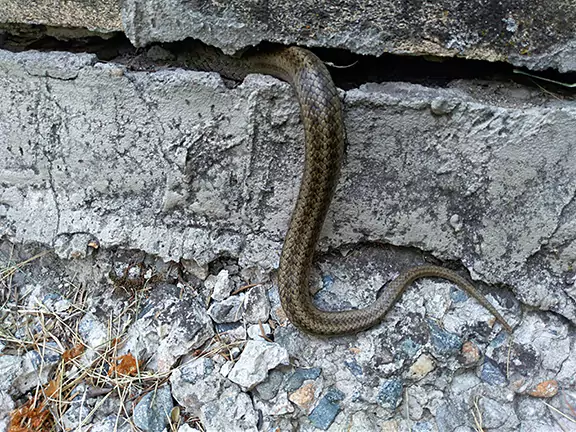
Other Snakes Are More Common Nuisances in Central Florida
Even though pythons are not the main concern in Central Florida, several native snakes regularly enter homes, barns, and yards, including:
Black racers
Rat snakes
Water snakes
Corn snakes
Cottonmouths (in some wetlands)
These snakes often follow rodents indoors or take shelter under porches, sheds, and landscaping during cooler months.
Snakes can be unpredictable, and identification can be difficult for homeowners—especially when large or unfamiliar snakes appear.
How Wildlife Works Can Help
If you see any snake—especially one you can’t identify—avoid approaching or handling it.
Wildlife Works provides:
Snake identification and inspection
Habitat and exclusion recommendations
Rodent control (reducing snake attractants)
Property assessments for barns, sheds, and homes
Whether it’s an invasive species, a python scare, or a common nuisance snake, our team can help keep your property safe.
Stay Informed, Not Alarmed
Burmese pythons continue to impact South Florida, but they are not spreading north into Central Florida due to climate limitations and winter mortality. Their range remains south of Lake Okeechobee, with concentrations in Collier and Broward counties.
Still, many other snakes can cause problems for homeowners, farms, and businesses in Central Florida. If you’re unsure about a snake on your property, or if you suspect one has entered your home or barn, Wildlife Works is here to help.
Have a snake on your property? Contact Wildlife Works today for safe, professional removal and peace of mind.
Need Help?
Call Now: 352-717-8727
Don’t wait for wildlife problems to escalate. Get expert help today.