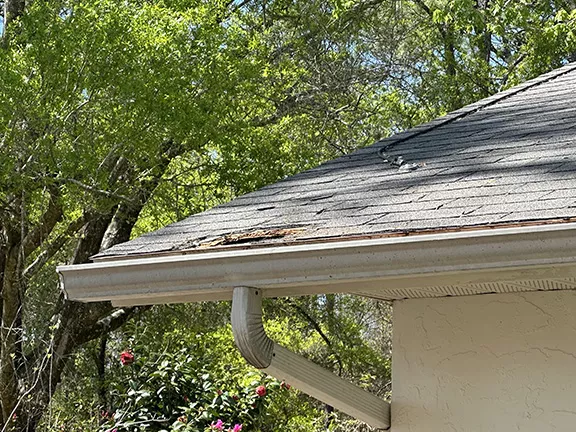
The homeowner initially contacted Wildlife Works after noticing visible damage to the roof. Shingles and underlying wood had been torn open, leaving a large hole directly into the attic space.
During the inspection, our technicians confirmed that a raccoon had been entering through the damaged roof area and using the attic as a den. The animal had likely been living inside the structure for some time without being detected.
Because raccoons are primarily nocturnal, their activity often occurs late at night when homeowners are asleep or away. In this case, the homeowner works night shifts and had not heard the typical scratching or movement sounds that often alert residents to attic wildlife activity.
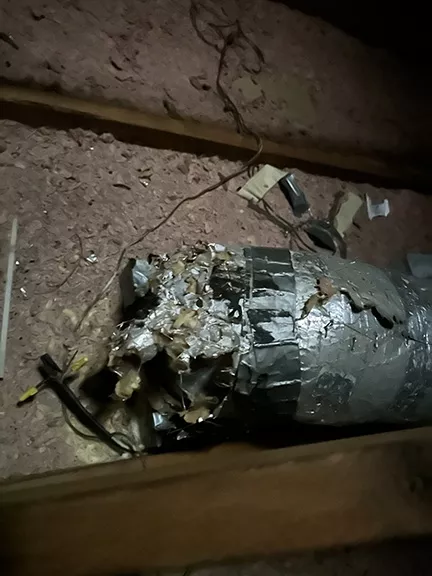
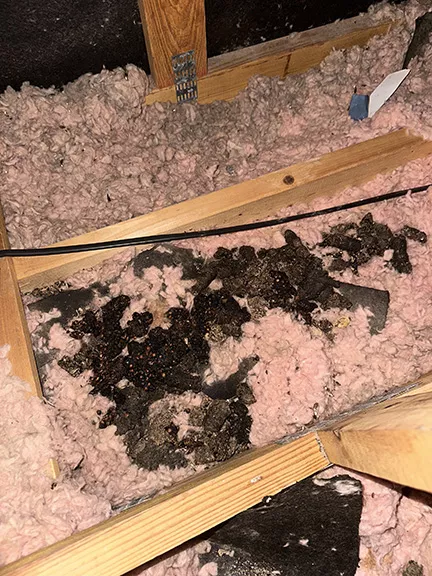
Inside the attic, our team found widespread signs of raccoon activity, including:
Animal waste in the attic insulation
Contamination inside sections of HVAC ductwork
Disturbed insulation used as nesting material
Structural damage near the roof entry point
The large roof opening also created an additional risk, allowing rainwater, insects, and other pests to enter the attic space.
This project presented several challenges that required careful planning.
Undetected Long-Term Occupancy
Because the raccoon had been living in the attic undetected, contamination had spread across multiple areas of insulation and ductwork.
Structural Roof Damage
The raccoon had torn through both shingles and the wood roof decking, leaving a large opening directly into the attic. This type of damage can quickly worsen if weather exposure occurs.
Secondary Pest Risk
Open roof entry points can attract additional wildlife and insects. Immediate sealing was required to prevent other animals from entering the home.
Wildlife Works followed a structured removal and exclusion process to resolve the issue safely and permanently.
After removal and repair work were completed, the attic was fully secured and the raccoon activity was eliminated.
Project results included:
Structural roof damage repaired and sealed
Attic contamination identified and addressed
Entry points secured to prevent future intrusion
The homeowner can now safely use the home without the risk of wildlife entering through the roof structure.
Call Now: 352-717-8727
XThe accessibility of our website is taken very seriously. We strive to meet WCAG Web Accessibility standards by routinely evaluating our website using automated evaluation tools and manual testing when required. As content changes we review and correct issues and are responsive to our users needs. If you encounter issues with our website, please report them so they may be corrected in a timely manner.