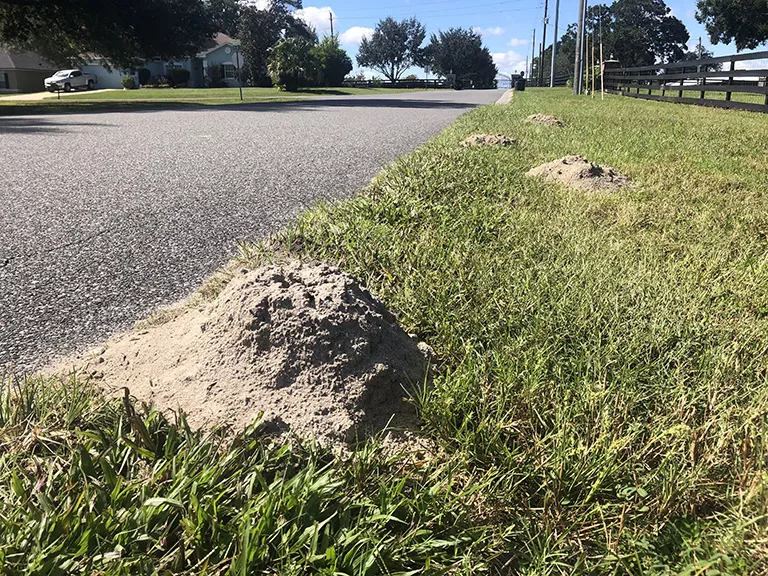
If you’ve noticed large mounds of dirt or uneven areas across your lawn, you may be dealing with gopher lawn damage. Pocket gophers are burrowing rodents that spend most of their time underground, creating extensive tunnel systems that can destroy landscaping, damage roots, and weaken soil structure.
Many homeowners confuse gopher damage with mole tunnels, but the two pests behave very differently. Moles create raised ridges just below the surface, while gophers leave behind crescent-shaped dirt mounds and deeper burrow systems. In Florida, pocket gophers thrive in sandy soil, making lawns, gardens, and even agricultural areas especially vulnerable.
Whether you have one gopher or several, their constant digging, feeding, and tunneling can cause significant and costly lawn damage if left untreated.
3 Signs of Gopher Damage
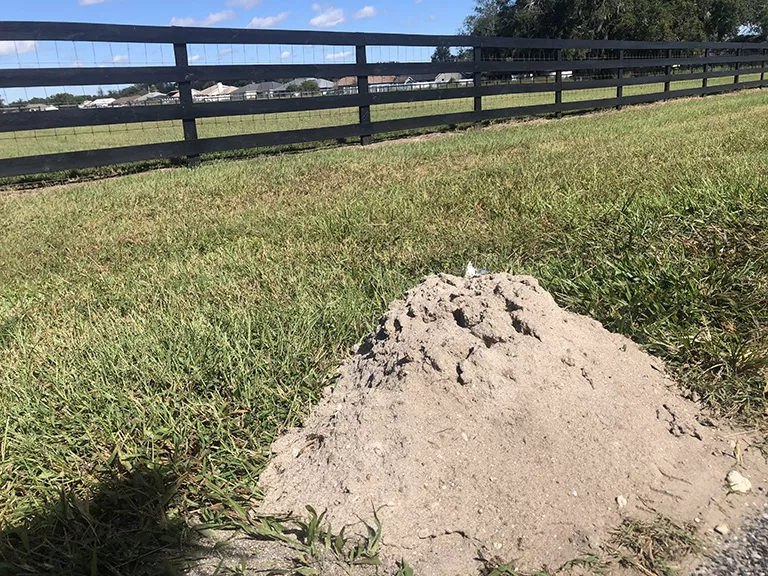
The first sign of gopher lawn damage is typically a mound of dirt that appears overnight. These dirt mounds are created as gophers dig new tunnels and push soil to the surface. Unlike mole mounds, which are round and volcano-shaped, gopher mounds are usually crescent-shaped and fan out in one direction.
Gophers create tunnels up to several feet underground with multiple entrances that open to the surface. Near these openings, you might find small holes or plugged mounds. As the tunnel system expands, you may notice raised areas in your yard or sunken patches where the soil has collapsed.
Another telltale sign of a gopher problem is damage to plants. Gophers feed primarily on roots, grasses, tubers, and ornamental plants. They often pull entire plants down into their tunnels to eat them safely underground. Homeowners might notice wilting shrubs, dying patches of grass, or garden plants that appear to be “yanked” from below.
If you see these indicators—mounds of dirt, raised tunnels, or missing plants—you likely have an active gopher tunnel system beneath your lawn.
Why Gophers Cause So Much Lawn Damage
Pocket gophers are solitary burrowing animals that dig both shallow and deep tunnels to search for food and shelter. Their extensive tunnel systems can reach hundreds of feet in length. As they dig, they move and loosen the soil, which can undermine your lawn, garden beds, and even the foundation of nearby structures.
Gopher tunnels can also damage underground utility lines, irrigation systems, and retaining walls. Their constant digging around pipes and cables can cause leaks or structural shifts. In areas with frequent irrigation, moist soil makes it easier for gophers to expand their tunnels quickly.
The animals feed on a wide range of vegetation—plant roots, ornamental plants, shrubs, and even tree bark. As they consume roots, they weaken turf and cause dead patches across your yard. Over time, this feeding and digging can alter soil composition, dry out grass, and create unsightly holes that make mowing and walking hazardous.
Gopher lawn damage is especially common in sandy or loose soils where burrowing is easy. Once a gopher establishes a main tunnel, it may stay in the same area for months, continually feeding and digging, which can cause extensive damage before the homeowner even realizes it.
Common Mistakes Homeowners Make
When dealing with gophers, many homeowners make the mistake of waiting too long to act. A single gopher can create several mounds per day, and within weeks, that activity can spread across the entire yard.
Another common mistake is confusing gopher mounds with mole mounds and applying the wrong treatment. Moles are insect eaters that leave raised ridges just below the surface, while gophers feed on plant roots and leave behind deeper tunnels and crescent-shaped mounds of dirt.
DIY remedies—such as flooding tunnels, placing smoke bombs, or scattering repellents—rarely eliminate gophers completely. While these tactics might push them away temporarily, gophers usually return or dig around the affected area. Using unapproved poisons can also harm predators like owls and snakes or unintentionally affect pets and other animals.
Finally, homeowners often overlook food sources. Gophers are attracted to areas rich in roots, tubers, and grubs. Failing to manage these food sources can make your lawn an ongoing target. When in doubt, contacting a pest control professional early can prevent extensive lawn and garden damage.
3 Effective Ways to Eliminate Gophers
There are several effective solutions for eliminating gophers from your lawn. The most reliable methods focus on trapping and exclusion rather than chemical control.
Trapping is the most effective way to remove active gophers. To do this, a pest control professional identifies fresh mounds and sets traps in the main tunnel. Because gophers are territorial, traps placed correctly can remove the active animal quickly.
Exclusion methods can also help deter gophers from returning. Installing underground barriers of wire mesh or hardware cloth around garden beds, lawns, or tree roots can prevent new burrows from forming. These barriers should extend at least two feet deep and curve outward at the bottom to block tunneling.
Another effective approach involves modifying the soil and planting choices. Since gophers are attracted to soft, fertile soil and plant roots, incorporating gravel layers or planting gopher-resistant species can make your lawn less inviting.
Avoid chemical poisons that could endanger other animals or contaminate your soil. Professional trapping and targeted removal remain the safest, most effective solutions for long-term control.
What Gophers Hate (and What Doesn’t Work)
Many homeowners want to deter gophers without harming other wildlife. Fortunately, gophers dislike certain plants and environmental changes that can be used to your advantage.
Plants such as daffodils, marigolds, lavender, and salvia are known to deter gophers because of their strong scent or taste. Planting these species around the perimeter of your lawn or garden can help create a natural barrier.
Vibration stakes and ultrasonic devices can sometimes discourage gophers from staying in one area, but results vary depending on soil type and tunnel depth.
While some people recommend mothballs, bleach, or gasoline, these methods are not only ineffective but can also contaminate soil and groundwater. Focus instead on proven exclusion methods and professional trapping for the most effective results.
4 Long-Term Prevention Strategies
Once gophers are removed, prevention is essential to keep them from returning. Regular lawn inspections can help you spot new activity early. Pay special attention after spring rains or irrigation cycles when the soil is soft and easier for gophers to dig.
Keep grass trimmed and remove mounds promptly. Open burrows should be sealed with soil to discourage reuse, and nearby vegetation should be maintained to reduce cover. If you have ornamental plants, consider adding wire mesh baskets around root systems before planting to protect them from underground feeding.
Encouraging natural predators such as snakes, owls, and outdoor cats can also help keep gopher populations in check. These predators feed on small burrowing animals and provide natural pest control without chemicals.
Proper soil management also plays a role in long-term prevention. Compacted soil is less appealing to burrowing rodents. Avoid overwatering, as saturated soil makes tunneling easier and attracts other pests like moles and voles.
When to Call a Professional
If your lawn shows signs of widespread gopher damage, or you’re noticing new mounds every few days, it’s time to contact a pest control professional. Professionals can identify the active tunnel system, locate main tunnels, and set traps in precise locations for maximum effectiveness.
A professional will also assess the soil composition, food sources, and landscape layout to create a prevention plan tailored to your property. For properties with irrigation lines or retaining walls, expert evaluation ensures that damage is addressed without disrupting utilities or other landscaping features.
Wildlife Works provides comprehensive gopher removal and prevention across Central Florida. Our team understands the habits of pocket gophers and other burrowing rodents, and we use safe, targeted trapping methods designed for long-term results. We help homeowners and property managers protect their lawns, gardens, and ornamental plants while preserving soil health and minimizing disruption.
Need Help?
Call Now: 352-717-8727
Don’t wait for wildlife or pest problems to escalate. Get expert help today.