
If you’ve ever spotted an earwig crawling across your bathroom floor, patio, or kitchen at night, you’ve probably wondered: are earwigs dangerous?
This unusual-looking insect is one of the most misunderstood pests found around Florida homes. Its intimidating pincers often lead homeowners to believe earwigs are venomous, aggressive, or capable of crawling into a person’s ear while they sleep. Fortunately, most of these concerns are based on myth rather than fact.
While earwigs can become a nuisance around homes and gardens, they are generally considered harmless to people and pets. Understanding their behavior, habitat, diet, and role in the environment can help homeowners determine whether earwigs are simply an annoyance or a problem that requires attention.
What Is an Earwig?
An earwig is a nocturnal insect belonging to the order Dermaptera. The most widely recognized species is Forficula auricularia, commonly known as the European earwig, although several species can be found throughout Florida and North America.
One species occasionally encountered in warmer regions is Labidura riparia, commonly called the striped earwig.
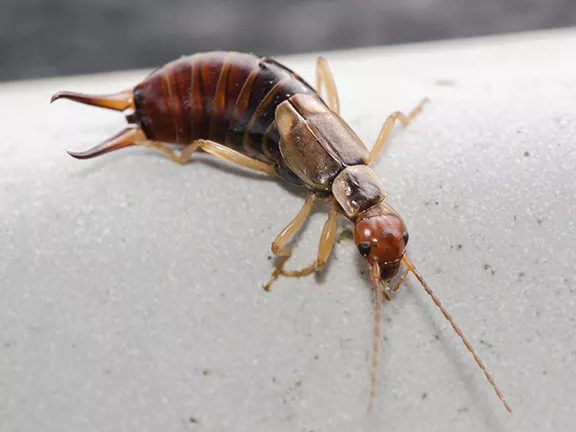
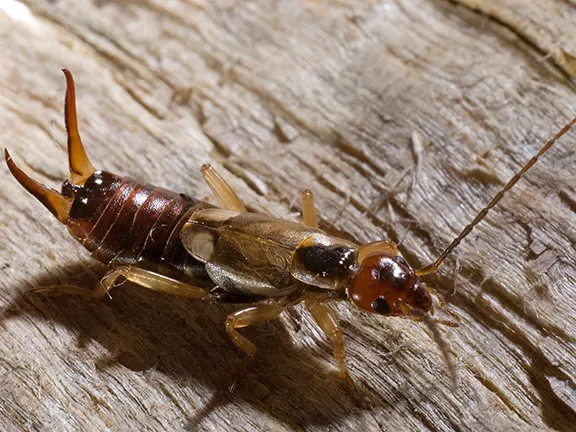
Earwigs are easily identified by the pair of forceps-like appendages at the end of their abdomen. These pincers are scientifically known as chelae and are often mistaken for stingers.
Adult earwigs typically measure between one-half and one inch long and are dark brown to reddish-brown in color.
Common places where earwigs are found include:
- Under mulch
- Beneath rocks and landscaping timbers
- Under tree bark
- Around flower beds
- Inside sheds and garages
- Near foundations
- Beneath outdoor furniture
Because they require high levels of moisture, earwigs are especially common after rainfall and during Florida’s humid months.
Are Earwigs Harmful to Humans?
The simple answer is no.
Despite their appearance, earwigs are not dangerous to people. They do not produce venom, they do not spread disease, and they are not known to transmit pathogens through bites or contact with human skin.
Many people worry that earwigs crawl into the human ear and burrow into the brain. This persistent story has circulated for centuries, but it remains a myth with no scientific basis.
If handled, an earwig may use its forceps as a defensive tool. Larger individuals can occasionally pinch exposed skin, but the sensation is generally mild and rarely causes injury.
For most homeowners, earwigs are considered a nuisance pest rather than a health threat.
What Do Earwigs Eat?
Earwigs are classified as opportunistic omnivores, meaning they consume both plant and animal material.
Their diet can include:
- Decaying vegetation
- Dead insects
- Fungi
- Soft fruits and berries
- Flower petals
- Tender leaves
- Organic debris
Earwigs also participate in natural predation by feeding on smaller insects and garden pests.
Common prey may include:
- Aphids
- Certain mites
- Small insect eggs
- Mosquito larvae
- Various members of the insect order Hemiptera
Because of this mixed diet, earwigs can sometimes provide limited benefits in gardens by helping reduce populations of certain pests.
Can Earwigs Damage Plants?
Although earwigs contribute to natural pest control, large populations can damage ornamental plants and gardens.
Earwigs commonly feed on:
- Young seedlings
- Flower petals
- Soft fruit
- Ripening berries
- Vegetable crops
- Tender leaf tissue
Homeowners may notice irregular holes in leaves, damaged flowers, or feeding marks on fruits.
In severe cases, earwigs can damage vulnerable seedlings before they become established.
Fortunately, significant plant damage is relatively uncommon unless environmental conditions support unusually high earwig populations.
Are Earwigs Dangerous to Pets?
Earwigs are generally harmless to pets.
Dogs and cats occasionally encounter earwigs outdoors, but the insects pose little risk. They are not venomous and do not contain toxins that would normally harm a pet if accidentally consumed.
Most encounters end with the earwig fleeing or the pet losing interest.
Why Are Earwigs Entering My Home?
Earwigs rarely invade homes because they want to live indoors.
Instead, they typically enter structures while searching for:
- Moisture
- Shelter
- Food
- Protection from extreme weather
Earwigs often move indoors after heavy rain, irrigation, or flooding conditions.
Common entry points include:
- Gaps around doors
- Cracks in foundations
- Utility penetrations
- Window frames
- Damaged weather stripping
Bathrooms, kitchens, laundry rooms, and crawl spaces often provide the humid conditions earwigs prefer.
Signs of an Earwig Infestation
Unlike ants or termites, earwigs do not form massive colonies inside structures. However, repeated sightings can indicate favorable environmental conditions around your property.
Signs of an earwig problem include:
- Frequent nighttime sightings indoors
- Earwigs gathering around exterior lighting
- Large numbers beneath mulch or debris
- Earwigs appearing in sinks or bathtubs
- Insects hiding beneath stored items outdoors
Recurring activity often suggests excessive moisture around the home.
Signs of an Earwig Infestation
Because earwigs are attracted to moisture, prevention focuses primarily on habitat modification.
To reduce earwig activity:
- Keep mulch away from foundations
- Remove leaf litter and yard debris
- Repair irrigation leaks
- Improve drainage around the home
- Store firewood away from structures
- Reduce excessive moisture in crawl spaces
- Seal gaps around windows and doors
Reducing favorable habitat conditions often provides the most effective long-term solution.
When Professional Pest Control May Be Necessary
Most earwig problems can be addressed through sanitation and moisture management. However, large populations may indicate environmental conditions that attract other pests as well.
Professional pest control may be helpful when:
- Earwigs repeatedly enter the home
- Moisture problems are difficult to identify
- Multiple pest species are present
- Outdoor populations remain high despite prevention efforts
A professional inspection can help identify the conditions supporting earwig activity and recommend appropriate solutions.
Why Early Earwig Control Matters
Although an earwig is not considered a dangerous bug, recurring activity around your home should not be ignored. Large numbers of earwigs often indicate excessive moisture, favorable habitat conditions, or environmental issues that may attract additional pests.
By addressing earwig activity early, homeowners can reduce nuisance populations, protect vulnerable plants, and prevent larger pest concerns from developing. Removing excess moisture, maintaining landscaping, and sealing entry points can go a long way toward keeping earwigs and other unwanted insects away from your home.
At Wildlife Works, we help Florida homeowners identify pest concerns, locate contributing environmental conditions, get rid of earwigs, and develop long-term solutions designed to keep homes protected throughout the year.
Need Help?
Call Now: 352-717-8727
Don’t wait for wildlife or pest problems to escalate. Get expert help today.