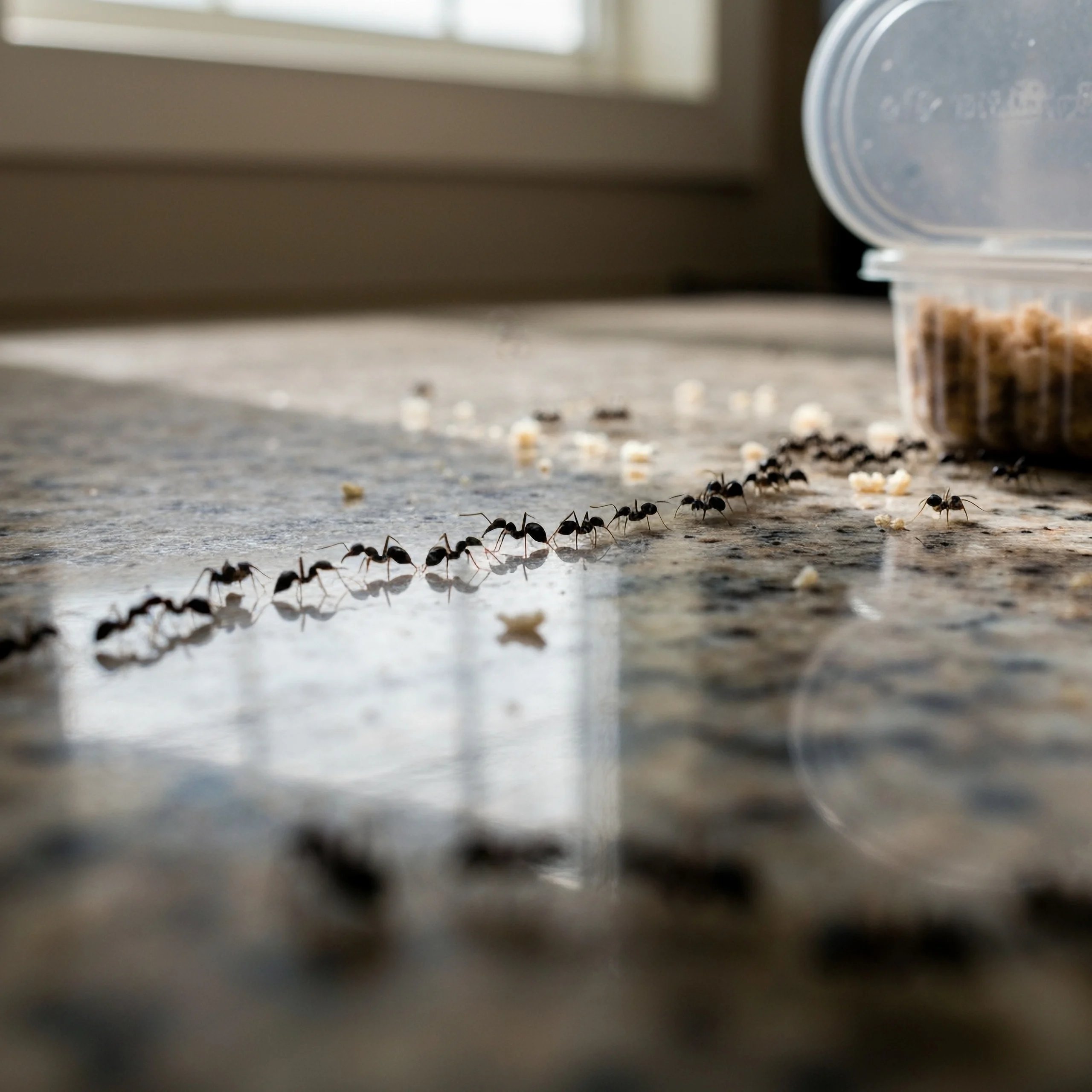
Finding ants in the kitchen can be frustrating, especially when you clean your counters only to discover more tiny ants a few hours later. Whether you’re seeing a single ant or long lines of ants marching across your countertops, understanding what attracts them is the first step toward getting rid of the problem.
Most homeowners don’t realize that when they see ants, they’re only seeing a small portion of the colony. The worker ants you see are simply searching for food and water while thousands more may remain hidden inside a nearby nest.
If you’re wondering how to get rid of ants and keep them from returning, it helps to understand why ants in your kitchen are there in the first place.
Why Are Ants in the Kitchen and What Are They Looking For?
One reason ants in the kitchen are so common is that the kitchen provides everything ants need to survive.
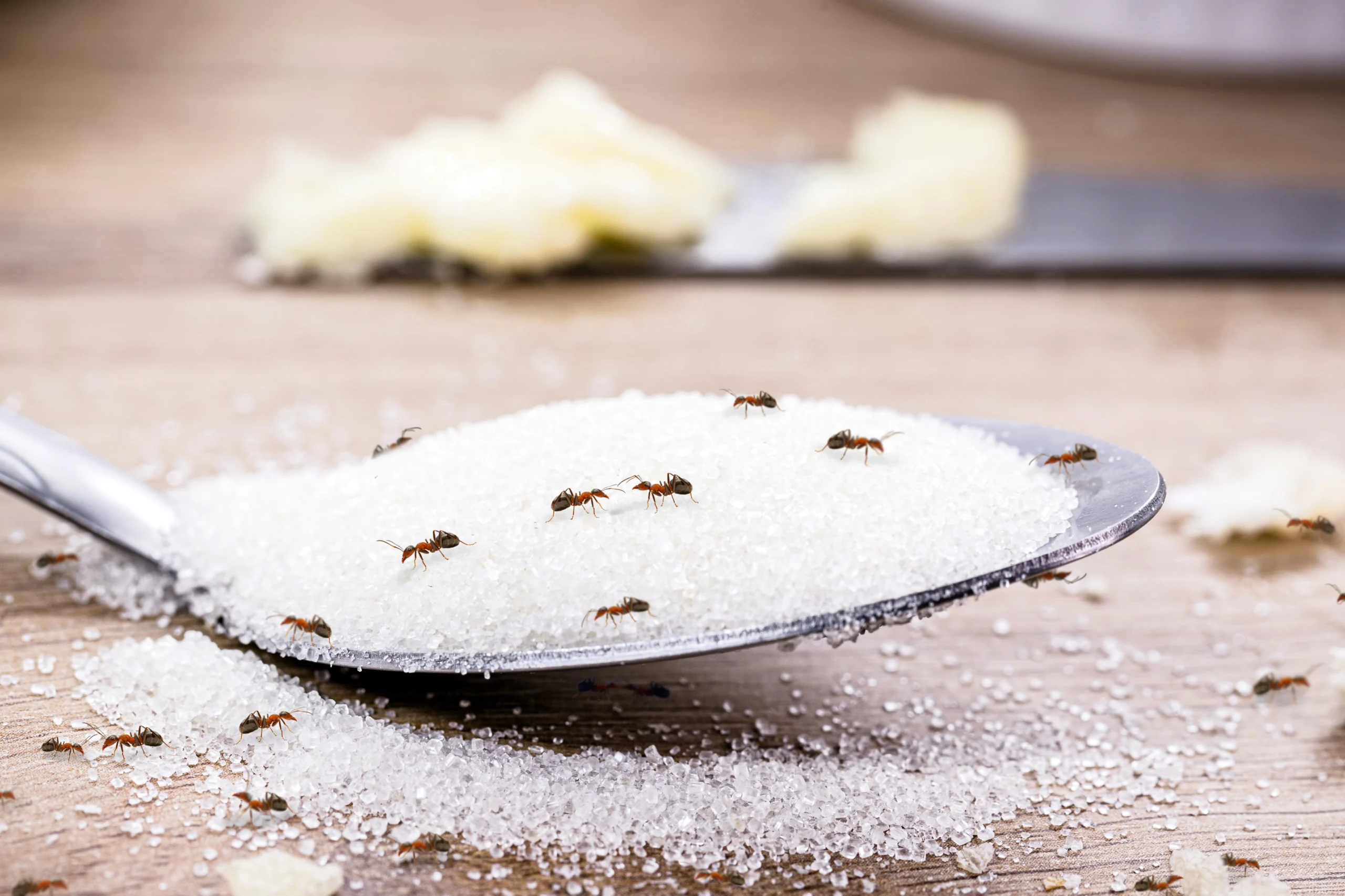
Like all insects, ants need reliable sources of food and moisture. Even a tiny crumb, a small sugary spill, or a forgotten pet bowl can become a valuable food source for an entire colony.
Common items that attract ants include:
- Crumbs on floors and tables
- Sugary drinks and snacks
- Pet food left out overnight
- Grease and food residue on kitchen counters
- Moisture around sinks and dishwashers
- Unsealed pantry items
Many ants are attracted to sweet foods, while others seek proteins, oils, or water. Once an ant discovers a food source, it leaves behind a pheromone trail that allows other worker ants to find it.
This is why homeowners often notice ants marching in a straight line across floors, walls, or kitchen countertops.
Ants in Your Kitchen: What Type of Ants Are Common in Florida?
Identifying the type of ants you’re dealing with can make a big difference when developing an effective ant control strategy.
Ghost Ants
Ghost ants are among the most common kitchen ants in Florida. These tiny ants are incredibly small and difficult to see, with dark heads and almost translucent, pale white legs and abdomens. They frequently invade homes searching for sweets and moisture, and form multiple colonies with multiple queens. The Ghost ant can rapidly “bud” (split into smaller nests) when threatened by sprays.
Argentine Ant
When the weather becomes too dry or too wet, the Argentine ant follows long trails inside through foundation cracks in search of water and food. You are most likely to find them trailing around sinks, near leaky pipes, in pantries, or by potted plants.
These ants form massive ant colonies and can quickly become a serious ant infestation if left untreated. Because colonies are so vast and shallow, typical DIY surface sprays or spot treatments are largely ineffective.
Pharaoh Ants
When the weather becomes too dry or too wet, the Argentine ant follows long trails inside through foundation cracks in search of water and food. You are most likely to find them trailing around sinks, near leaky pipes, in pantries, or by potted plants.
These ants form massive ant colonies and can quickly become a serious ant infestation if left untreated. Because colonies are so vast and shallow, typical DIY surface sprays or spot treatments are largely ineffective.
Odorous House Ants
Odorous house ants (also called sugar ants) are known for the unpleasant smell they release when crushed. They frequently invade kitchens in search of sugary foods and water. Because a single colony may contain thousands of these tiny ants, they can be very challenging to eliminate on your own simply due to their sheer numbers and tendency to multiply.
Carpenter Ants
Unlike termites, carpenter ants do not eat wood. However, they do excavate damp wood to create a nest, which can contribute to structural damage over time. Swarming season typically peaks in the spring and early summer, especially after rainfall, and you are most likely to spot them foraging for sweets or insects at night.
Different ants require different treatment methods, which is why proper identification is important before beginning any pest control program.
Signs of an Ant Infestation in Your Home
Occasional ant activity may not indicate a serious problem. However, recurring sightings often suggest a larger infestation nearby.
Signs of an ant infestation include:
- Frequent ant trails on counters and walls
- Large numbers of visible ants
- Ants appearing near sinks and plumbing
- Repeated sightings after cleaning
- Ants gathering around pet food bowls
- Small piles of debris near a nest site
If ants keep returning despite your efforts, they may have established a colony inside the structure or near an entry point around your home.
Getting Rid of Ants in the Kitchen
Many homeowners ask, “What’s the best way to get rid of kitchen ants?”
Successfully getting rid of ants requires addressing both the insects you see and the colony you don’t.
Keep Your Kitchen Clean
A clean kitchen removes many of the resources ants are seeking.
To reduce ant activity:
- Wipe down kitchen counters daily
- Clean food residue from appliances
- Sweep floors regularly
- Store food in airtight containers
- Clean spills immediately
- Remove pet food after feeding
Keeping your kitchen clean helps eliminate the food and water sources that ants love.
Seal Every Entry Point
Ants can get inside through incredibly small openings.
Inspect for gaps:
- Around windows
- Around doors
- Around plumbing penetrations
- Near utility lines
- Along foundations
Using caulk around windows, pipes, and other openings can reduce the number of entry points for ants into your home.
Eliminate Moisture Sources
Many homeowners focus only on food, but ants want water as well.
Repair leaks, dry sinks overnight, and address standing water near appliances. During periods of dry weather, ants may enter structures primarily searching for moisture.
Ant Control Methods Homeowners Often Try
When homeowners begin eliminating ants, they often start with DIY solutions.
Some common approaches include:
- Peppermint oil
- Tea tree oil
- Tea tree and citrus-based sprays
- Vinegar and water cleaning solutions
- Coffee grounds
- Natural repellent products
While these methods may temporarily discourage ants, they rarely eliminate established ant colonies.
A natural repellent may interrupt a scent trail, but it usually doesn’t destroy the colony itself.
How to Get Rid of Ants Using Bait Systems
One effective way to get rid of certain species involves using a liquid bait.
Rather than killing ants immediately, bait allows worker ants to transport food back to the colony.
The process works because:
- Ants find the bait.
- Worker ants take the bait back.
- The bait is shared throughout the colony.
- The treatment reaches ants hidden in the nest.
When ants take the bait back, it can reduce colony populations more effectively than simply spraying the visible ants.
However, some species respond differently to bait products, and incorrect treatment can actually make an ant problem worse.
Prevent Ants From Coming Back
The best long-term solution combines treatment with prevention.
To prevent ants from returning:
- Store food in sealed containers
- Clean kitchen countertops daily
- Address leaks quickly
- Seal cracks with caulk
- Remove food and water sources
- Inspect potential entry points regularly
Consistent prevention helps prevent them from coming back and keeps your kitchen free of future infestations.
When Professional Ant Control Is Necessary
Sometimes ants keep returning no matter how much cleaning or DIY treatment you perform.
This often occurs because the colony remains hidden behind walls, beneath slabs, or outside near the structure. The worker ants you see represent only a small percentage of the overall population.
When an ant problem persists, professional ant control can identify:
- The specific ant species
- Colony locations
- Active nesting sites
- Conducive conditions around your home
A professional inspection can also determine why ants are coming indoors and what conditions continue attracting them.
Why Early Ant Control Matters
Finding ants in the kitchen doesn’t necessarily mean your home is dirty. In most cases, ants have simply discovered access to food, water, or shelter. However, when ant activity is ignored, a few worker ants can quickly lead to a larger infestation. Early ant control helps eliminate food sources, reduce colony growth, and prevent ants from becoming a recurring problem inside your home.
By maintaining a clean kitchen, sealing entry points and addressing moisture issues, homeowners can significantly reduce the conditions that attract ants. If ants keep returning despite these efforts, professional ant control may be necessary to locate hidden nests and eliminate the source of the infestation.
Professional Pest Control for Ant Infestations
Severe infestations often require professional pest control and targeted ant control strategies.
Because different ants behave differently, successfully eliminating ants requires more than treating the insects on your countertops. Effective treatment focuses on the colony, eliminates food and water sources, and helps prevent ants from returning.
At Wildlife Works, we help homeowners identify the specific type of ants involved, locate hidden nests, and develop customized solutions designed to eliminate the source of the problem.
Need Help?
Call Now: 352-717-8727
Don’t wait for wildlife or pest problems to escalate. Get expert help today.