
Large-scale commercial land development projects often involve clearing and grading significant amounts of undeveloped land. In Florida, these same types of properties are commonly occupied by gopher tortoises and their burrows. For developers planning warehouses, distribution centers, industrial parks, or large commercial campuses, understanding how gopher tortoises intersect with development is an important part of early project planning.
Learn why gopher tortoises are frequently found on commercial sites, when they are typically discovered during development, and what the consequences can be if burrows are damaged without proper planning.
Why Gopher Tortoises Are Common on Commercial Development Sites
Commercial projects often target large parcels with open space, sandy soils, and minimal existing infrastructure. These conditions are also ideal for gopher tortoises, which prefer dry, well-drained upland areas with low vegetation.
Land that was previously used for pasture, timber, or agriculture is especially likely to support gopher tortoise populations. When these properties are rezoned or sold for commercial use, tortoise burrows are often already present long before construction begins.
Because warehouses and industrial facilities typically have large footprints, the likelihood of encountering multiple burrows increases with site size.
What a Gopher Tortoise Burrow Means for a Commercial Property
A gopher tortoise burrow is not a shallow hole. It is a deep tunnel system that can extend several feet underground and remain in use for decades. These burrows are visible at the surface and are often identified during environmental assessments, site walks, or early clearing activities.
On commercial sites, one burrow usually indicates the presence of others nearby. That makes early identification important, especially before heavy equipment begins grading or utility work.
Ignoring burrows or discovering them too late in the construction process can lead to avoidable delays.
When Gopher Tortoises Are Typically Discovered During Development
For most commercial projects, gopher tortoises are identified during one of the following stages:
- Initial due diligence or environmental review
- Site surveys and engineering layout
- Vegetation clearing and grading
- Utility trenching or road construction
In some cases, burrows are not noticed until equipment operators encounter them in the field. At that point, work may need to pause while the issue is addressed.
Developers who account for wildlife considerations early tend to experience fewer disruptions later.
Permitting and Relocation Considerations for Commercial Projects
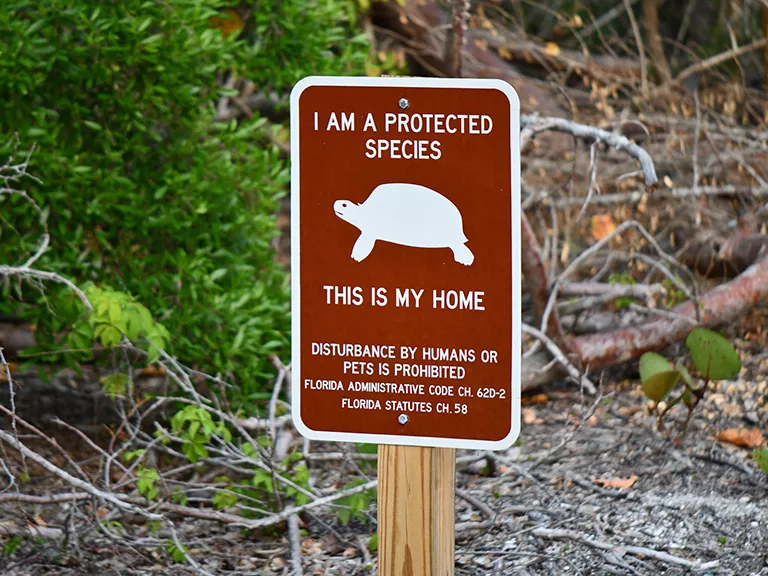
In Florida, gopher tortoises and their burrows are legally protected. Activities that disturb burrows within a defined distance require authorization before work can proceed.
Commercial projects may require different types of permits depending on how many burrows are present and whether the site has already been disturbed. These permits are typically handled by qualified agents or consultants who conduct surveys, prepare documentation, and coordinate any necessary relocation efforts.
The permitting process takes time, which is why it is best incorporated into the project schedule rather than addressed after construction has begun.
Penalties for Destroying Gopher Tortoise Burrows in Florida
Destroying gopher tortoise burrows or harming tortoises without proper authorization can result in serious consequences.
Penalties may include civil fines that range from hundreds to thousands of dollars per violation. In more severe cases, violations may be treated as criminal offenses, which can carry additional fines and potential jail time. Enforcement actions can also include stop-work orders that delay construction until corrective measures are implemented.
For commercial developers, these penalties often cost far more in project delays and remediation than early planning would have.
Best Practices for Commercial Land Development
Developers working on large sites can reduce risk by integrating wildlife planning into the early phases of a project.
- Conduct site evaluations before clearing begins
- Identify and map burrows during initial surveys
- Coordinate wildlife considerations with engineers and planners
- Allow time in the schedule for surveys and permitting
- Work with professionals experienced in commercial development environments
These steps help maintain predictable timelines and reduce the chance of unexpected interruptions once construction is underway.
Commercial Development in Ocala and Central Florida
In areas like Ocala and Marion County, large tracts of undeveloped land are still common. These regions also support healthy gopher tortoise populations, which means commercial projects frequently encounter burrows during planning or construction.
Developers who understand the regional landscape and plan accordingly are better positioned to move projects forward without unnecessary delays.
Planning a Commercial Project on Undeveloped Land?
If you are preparing to develop a warehouse, industrial site, or large commercial property in Florida, early identification of gopher tortoise burrows is an important part of responsible project planning.
Wildlife Works supports commercial land development projects throughout Central Florida by assisting with site evaluations and coordination related to gopher tortoise activity. Early involvement helps keep projects moving forward while addressing wildlife considerations appropriately.
Need Help?
Call Now: 352-717-8727
Don’t wait for wildlife problems to escalate. Get expert help today.