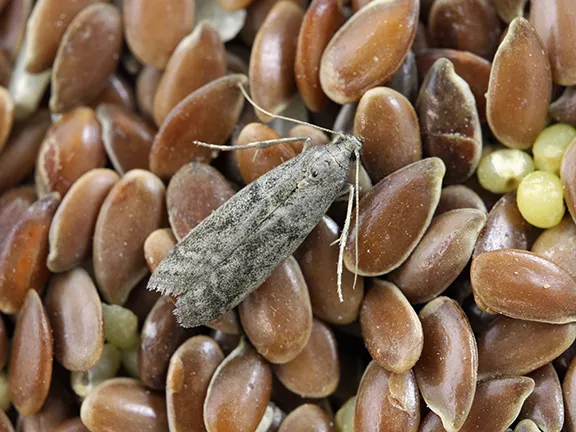
Pantry pests are one of the most frustrating issues for homeowners in Central Florida. These small insects—including pantry moths and beetles—invade stored food products like flour, cereal, rice, spices, and even pet food. What starts as a few pantry bugs in a single cabinet can quickly turn into a widespread pantry pest infestation, affecting multiple food storage areas throughout the home.
Because many pantry pests live and reproduce inside food, simply discarding visible insects rarely solves the problem.
At Wildlife Works, our pantry pest control approach focuses on identifying the species, removing infested items, and breaking the entire life cycle to prevent reinfestation.
We provide professional pantry pest control throughout Central Florida, including Ocala, Belleview, The Villages, and surrounding communities. Whether you’re dealing with pantry moths in your kitchen or beetles in dry goods and stored products, we deliver targeted, long-term solutions.
Pantry pests are often discovered after food contamination has already occurred.
Common issues include:
Pantry moths flying around kitchens or near cabinets
Pantry bugs inside flour, cereal, rice, and grain products
Webbing or larvae inside food packages
Beetles like red flour beetles, confused flour beetles, or sawtoothed grain beetles
Infestations in pet food, bird seed, or bulk food storage
Tiny holes in packaging from insects that feed inside products
Reinfestation even after throwing away visible infested food items
Many infestations start from a single contaminated item and spread quickly across multiple food items.
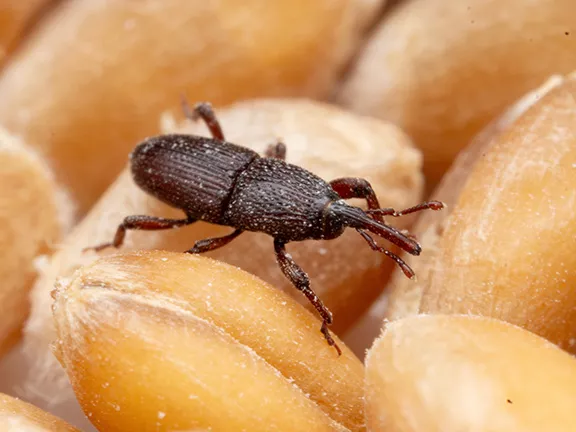
Several species are frequently encountered in Florida homes, each with different behaviors and risks.
Indian meal moth (Indianmeal moth)
Mediterranean flour moth
Angoumois grain moth
These pests lay eggs in food, and once eggs hatch, larvae feed on dry goods before becoming adult moths.
Red flour beetle (including adult red flour beetle)
Confused flour beetle
Cigarette beetle and drugstore beetles
Granary weevil and rice weevils
Lesser grain borer
These pests may act as internal feeders (developing inside grains) or external feeders (infesting surfaces of food products).
Pantry pests are typically introduced into the home through already infested food.
Common causes include:
Bringing home contaminated food packages from stores
Storing food in plastic bags or unsealed packaging
Leaving food exposed instead of using airtight containers
Crumbs or food particles in cabinets and shelves
Warm, humid conditions that allow pests to thrive
Long-term storage of dry goods without rotation
Once inside, pests can spread rapidly across multiple storage areas and containers.
Homeowners often try to get rid of pantry pests by throwing away infested food or using traps. While this is a good first step, it rarely solves the full problem.
Why DIY methods fall short:
Infestations may already be hidden in unopened packages
Eggs and larvae remain in cracks, shelves, and containers
Pheromone traps and sticky traps only catch adult insects
The life cycle continues if not fully interrupted
Infestations spread to new food sources
Effective pantry pest control requires eliminating both visible pests and hidden breeding areas.
Our process is designed to eliminate infestations and prevent them from returning.
Identification of pest species and infestation source
A thorough inspection of pantry shelves, cabinets, and food storage areas
Guidance on safely discarding infested items
Deep cleaning recommendations to remove eggs and larvae
Targeted treatments in cracks, crevices, and hidden areas
Recommendations for storing food in sealed containers with tight fitting lids
Prevention strategies to avoid future infestations
Our goal is to eliminate pantry pests at every stage of their life cycle—from eggs to adults.
We start with a detailed inspection of your home’s exterior and interior to identify entry points, nesting areas, and conditions attracting pests.
This allows us to understand the root cause—not just the visible activity.
Next, we address what’s allowing pests to thrive.
This may include sealing gaps, improving sanitation conditions, or removing environmental factors that attract insects and rodents in the first place.
We apply targeted, low-impact treatments only where needed.
In most cases, this means using baits and precision applications instead of widespread chemical spraying—reducing exposure while increasing effectiveness.
Pest activity can change with seasons and conditions, especially in Central Florida.
We continue to monitor your property, track activity, and adjust the plan as needed to prevent small issues from turning into larger infestations.
At Wildlife Works, pest control is built around solving the problem at its source—not just managing it over time. Our approach focuses on understanding why pests are present, correcting those conditions, and using targeted treatments only when necessary.
We follow a structured Integrated Pest Management approach that prioritizes inspection, correction, and precision treatment. Instead of relying on routine chemical applications, we focus on long-term prevention and minimal environmental impact.
Providing a more effective, lower-impact solution designed for lasting control.
Best for homes with active pest problems or those that need year-round protection.
Best for preventative maintenance and homes with low to moderate pest pressure.
Best for homes that prefer a conventional pest control approach with regular service visits.
Add-On Available with any plan.
Posted on Google
 Melissa Coltey0 days ago
Trustindex verifies that the original source of the review is Google.
Wildlife Works is incredible. Great customer service, very caring and makes sure that everything is explained clearly. Goes above and beyond. I cannot say enough positive things.Posted on Google trav strick2 days agoI had an outstanding experience with Wildlife Works! Their team is incredibly professional and efficient. They're experts at pest removal, and their dedication to wildlife preservation is commendable. I appreciate their eco-friendly approach and commitment to humane practices. I highly recommend Wildlife Works for anyone in need of pest removal services.Posted on Google
 alison northcutt5 days agoSquirrels in the attic driving us and the dogs crazy! 2 days after they came we can sleep again. Awesome work Spencer and Zack!!Posted on Google
 Sue F10 days agoMary assessed the situation and was able to trap my squirrel visitor very quickly. She released her and ran up a tree. Thanks so much.Posted on Google
 Annie Guillarmod13 days agoRepeat customer. I am extremely satisfied with their service. They are quick to respond. Spencer came out and handled my issue. Very professional. Wildlife works is my go-to company for when have issues with wildlife.Posted on Google
 Judith Glenn17 days agoI had a very good experience and would highly recommend this companyPosted on Google
 Trudie McElwain21 days agoI highly recommend Wildlife Works of Central Florida LLC. Their service is excellent and their pricing is very reasonable. I had a pocket gopher digging numerous holes in the backyard. Tanner came out promptly and knew exactly what he was doing. He placed traps in the busiest tunnels and quickly caught the gopher! My heartfelt appreciation to Tanner and Wildlife Works of Central Florida for a job very well done.Posted on Google
 Robert McQuaig24 days agoZack showed up right on time, knew exactly what needed to be done and did a great job. Thanks so much.Posted on Google
 Dianne Brown25 days agoVery helpful and accommodating company. Glad I found them.Posted on Google
 W W26 days agoCorinne and her team were great. They made a very difficult situation better. They were extremely helpful & informative through the entire processVerified by TrustindexTrustindex verified badge is the Universal Symbol of Trust. Only the greatest companies can get the verified badge who has a review score above 4.5, based on customer reviews over the past 12 months. Read more
Call Now: 352-717-8727
If you’re finding pantry bugs, moths, or contaminated food, the infestation may be more widespread than it appears.
Our team will identify the source, eliminate the pests, and help protect your home with long-term solutions.
XThe accessibility of our website is taken very seriously. We strive to meet WCAG Web Accessibility standards by routinely evaluating our website using automated evaluation tools and manual testing when required. As content changes we review and correct issues and are responsive to our users needs. If you encounter issues with our website, please report them so they may be corrected in a timely manner.